You don’t buy a synth just because it’s trending. You buy it because it does the thing — the wobble, the warmth, the growl, the shimmer. The best synthesizer for you isn’t necessarily the flashiest or the priciest. It’s the one that makes your ideas move faster than your fingers. Some players want the smooth grit of analog. Others are deep in the digital weeds, building evolving soundscapes on a matrix of menus and mod routes.
Maybe you’re gigging hard and need a portable synthesizer that won’t choke mid-set. Or maybe you’re at home, building bangers from a desktop rig with zero floor space. This guide isn’t about brand loyalty or spec sheets — it’s about finding the best synthesizer for your kind of noise.
Synth Jargon Decoded: What the Specs Mean for Your Sound
Every synth page throws out terms like “16-voice polyphonic hybrid with dual filters and a modulation matrix” like that means something to normal people. If you're not fluent in synthspeak (yet), here's a breakdown of the specs that matter and what they mean for your sound.
Polyphony
Polyphony refers to how many notes your synth can play at once.
- Monophonic = one note at a time (great for bass and leads)
- Polyphonic = multiple notes (you’ll want this for pads, chords, soundscapes)
Finding the best synthesizer means figuring out if you'd rather play melodies or full arrangements.
Oscillators
These are your sound sources — sine, saw, square, triangle, noise, wavetables, etc. More oscillators = more sonic layering possibilities. Some synths let you detune, sync, or modulate for gnarlier tones. Big, wide sounds usually come from stacking multiple oscillators and dialing in detune or cross-mod.
Filters
Filters shape the tone by cutting frequencies. The low-pass filter rolls off the high end and makes sounds smoother or darker. Look for resonance (aka “that squelch”) and filter slope (how aggressive the cutoff is). If you want that iconic analog tone, the filter is where the magic lives.
LFOs (Low-Frequency Oscillators)
LFOs are not for making sound, but for modulating it. Use an LFO to make pitch vibrate, filter move, or panning shift. The best synthesizers let you assign multiple LFOs to multiple destinations — wild things happen fast. If it sounds like it's moving, pulsing, or breathing, it probably has an LFO behind it.
Envelopes (ADSR)
Envelopes control how your sound behaves over time:
- Attack = how fast it starts
- Decay = how fast it drops from peak
- Sustain = the level it holds
- Release = how long it fades after release
Aftertouch
Pressure sensitivity after the initial keypress. Channel aftertouch affects the whole patch, while poly aftertouch lets you control each note individually. This is a sleeper feature on some of the best keyboard synthesizers — huge for expressive playing.
Mod Matrix
Short for “modulation matrix” — a digital control center where you can assign things like LFOs and envelopes to whatever you want: pitch, filter, pan, reverb depth, etc. Think of it like patch cables, but inside the synth. The more flexible the mod matrix, the more sound design power you’ve got.
Waveforms & Synthesis Types
Not all synths use the same engine. A few of the more common types include:
- Subtractive (classic analog-style): Start rich, sculpt it down
- Wavetable: Scrollable waveforms = evolving, futuristic textures
- FM (Frequency Modulation): Bell-like, metallic, complex
- Granular: Chops up audio into tiny grains = pure madness
Important: The best synthesizer keyboard for you might depend more on the synthesis type than a brand name.
Know Your Type: What Kind of Synth Player Are You?
You wouldn’t hand the same synth to a techno producer, a jazz pianist, and a modular freak and expect them to get the same results — or even want to. Synths are tools, but they’re also extensions of the player. So before you drop coin, figure out who you are in the synth ecosystem.
The Analog Head
You like your waveforms raw, your filter resonance creamy, and your signal path free of digital nonsense. You’re here for the tone — the kind that pushes air and gives your basslines that syrupy throb.
- Korg Minilogue: Affordable, polyphonic analog, and surprisingly punchy. You get four voices, 100 slots for custom patches, and an OLED oscilloscope to see your waveforms move. It’s the best entry point for players hunting the best analog synth without dropping Moog-level cash.
- Sequential Take 5: This one’s for players who want that American analog mojo (Prophet-style filters!) with five voices, built-in FX, and tons of mod options without being buried in menus.
Best for: Sound-first players, subtractive synth purists, anyone tired of lifeless presets.
The Digital Designer
You’re not intimidated by screens, submenus, or matrix mod routing. You want evolving textures, LFOs controlling LFOs, and a synth engine that feels more like a software plugin in a box.
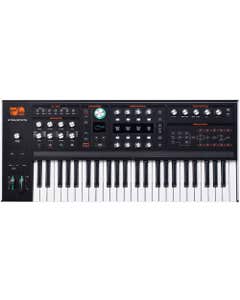
- ASM Hydrasynth: It’s practically a spaceship. 8-voice polyphony, three oscillators per voice, five LFOs, five envelopes, and a mod matrix that lets you twist and tangle anything to anything. It also has polyphonic aftertouch, which is rare (and amazing). This thing begs to be explored.
- Elektron Digitone: A modern FM synth that makes FM actually fun. Killer for textures, pads, weird percussion. You also get Elektron’s signature sequencer.
- Roland Fantom-06: For players who want workstation power with synth flexibility. It’s got Roland’s ZEN-Core engine, sample playback, full DAW integration, and a huge screen. A bit more “pro studio” than wild experimentation, but incredibly powerful.
Best for: Producers who love deep editing, modular-like control, or unique sonic design.

The Gigging Musician
You need gear that shows up, stays in tune, switches patches fast, and doesn’t weigh a ton. You’re on stage more than in a studio, and you don’t have time for gear that gets in its own way.
- Yamaha MODX6+: You get dual engines here — FM-X for complex textures and AWM2 for realistic instruments. Great for layering piano, strings, and synth sounds live. Lightweight, powerful, and priced right for working musicians.
- Roland GAIA 2: Sleek, approachable, and flexible. Wavetable synthesis plus virtual analog, an intuitive layout, and motion recording for live automation. A smart choice if you want creative freedom and reliability.
Best for: Live players needing fast access to presets, hands-on control, and the best portable synthesizer that doesn’t skimp on tone.
The In-the-Box Producer
Your synth is one piece in a larger machine. If you’ve already got a DAW, plugins, and an interface, you just need a synth that can integrate clean, sound big, and not eat your desk space.
- Novation Peak: Hybrid engine with digital oscillators and analog filters. Big, rich sound with tight MIDI control. USB and DIN MIDI, no keys, and loads of hands-on modulation — perfect for studio setups.
- Arturia MiniFreak: Dual digital engines with analog filters, stereo effects, and killer DAW integration. Small footprint, great keys, and a built-in sequencer. Feels like a cheat code for producers.
- Modal Cobalt8: 8-voice virtual analog with morphable waveforms and a clean user interface. Great with a DAW, and the companion software editor gives it even more flexibility.
Best for: Bedroom producers, beatmakers, or anyone needing the best synthesizer keyboard for hybrid setups.
The Patch Cable Philosopher
You don’t want presets — you want possibilities. You’re more into routing CV than saving patches. Maybe you’re building your first Eurorack case, or maybe your wall of modules has its own zip code.
- Moog Matriarch: 4-note paraphonic, stereo analog delay, and tons of patch points. One of the richest semi-modular synths out there — brilliant for evolving textures and hands-on sound design.
Best for: Sound designers, modular dabblers, or anyone building a rig that values voltage over convenience.
Honorable Mention: Roland AIRA Compact S-1
If you want a synth you can throw in your backpack but still crank out legit ideas on the fly, the Roland AIRA Compact S-1 is a no-brainer. It’s polyphonic, loaded with iconic Roland tones, and built like a little black box of chaos. Great for sketching sounds, layering textures, or just getting weird on the go. Tiny footprint — huge vibe. Check out this quick video for a quick look at what this desktop beast can do.
Key Features to Consider: What Matters When Choosing a Synth
Spec sheets are cool, but they don’t tell the whole story. Choosing the best synthesizer isn’t just about polyphony and filter types — it’s about how you play, what sounds you need, and whether the thing actually fits into your creative life.
Analog vs Digital: No, It’s Not a Fight
Let’s settle it: analog isn’t better, and digital isn’t cheating. They just do different jobs.
- Analog gives you organic warmth, subtle imperfections, and filters that sing.
- Digital gives you versatility, polyphony, and insane sound design tools — like wavetables, FM engines, and MPE support.
If you want lush pads with modulation for days, go digital. If you want earth-shaking bass with attitude, you're probably searching for the best analog synth you can get.
Portability: Can You Gig Without a Chiropractor?
Not every synth needs to be strapped into a flight case. If you’re bouncing between home studio sessions and live sets, weight and size matter more than you think. Look for:
- Compact footprints (under 37 keys)
- USB power or battery operation
- Tough, lightweight chassis
Some of the best portable synthesizers punch way above their size — think Roland Boutique series or the MicroFreak. If your rig needs to fly or fit in a backpack, leave the 88-key monsters at home.
Synth Keyboard vs Module: Do You Actually Need the Keys?
Spoiler: You don’t always need a keyboard. If you already have a MIDI controller or you’re working in a DAW-first setup, a desktop synth module can save money and space. But if you perform live, a well-built keyboard synthesizer is a must. Look for:
- Aftertouch support (bonus if it’s polyphonic)
- Velocity-sensitive keys
- Solid build quality with non-squishy action
If you’re serious about playing, the best keyboard synthesizer gives you expressive control over every note, not just something to trigger sounds.
Connectivity: Does It Play Well With Others?
A great synth becomes a frustrating paperweight if it doesn’t talk to the rest of your gear. Check for:
- MIDI (5-pin and USB)
- Audio over USB (if you’re recording direct)
- CV/Gate I/O (for modular heads)
- Pedal inputs for sustain or expression
If you're deep in production, finding a synth that fits right into your DAW setup will save you time and headaches.
Your Sound Deserves the Right Synth — Find It at AMS
Whether you're hunting for a gritty analog beast, a portable jam box, or the best synthesizer keyboard for full-on studio sessions, American Musical Supply has the gear to match your sound — and your budget. With flexible 0% interest payment plans, VERY fast and free shipping, and a killer lineup of synths from trusted brands, AMS makes it easy to score the best synthesizers without second-guessing your setup. Check out our entire collection today!
Frequently Asked Questions: Finding the Best Synthesizer
If you still have questions about finding the best synthesizer to fit your sound needs, check out our helpful FAQ down below for more info!
What’s the best synthesizer under $500 for serious production?
Price doesn’t always mean compromise. Synthesisers like the Roland JU-06A offer pro-level sound design and performance without breaking the bank.
What makes a synthesizer “the best” for someone?
It comes down to workflow, sound preference, and use case. The best synthesizer for you will feel intuitive, inspire creativity, and work seamlessly with your setup — whether that's a live rig, a studio, or a bedroom beat lab.
What should I avoid when shopping for the best synthesizer?
Don’t get distracted by flashy specs or features you won’t use. Avoid synths that don’t fit your workflow, don’t integrate with your setup, or lack enough sound-shaping depth. The best synthesizers feel immediately playable — if you’re fighting the interface, it’s not the one.