Ever wonder how guitarists were heard over loud horns and pianos before electric amps were around? The call was answered with the invention of the resonator guitar.
Today, they’re loved not just for their volume, but also that signature metallic twang that has helped define bluegrass, blues, and country music. However, if you’re new to this corner of the guitar world, the terminology can be a little confusing. You might hear people use the words "Dobro" and "resonator" interchangeably, but they aren't exactly the same thing.
In this article, we’re going to get into the history, mechanics, and differences between Dobro vs. resonator guitars, helping you discover the sound that “resonates” with you — see what we did there…?
History of the Resonator Guitar
To understand the difference between a Dobro and a resonator, we have to look back to the 1920s. This was the Big Band era, and acoustic guitar players were having a tough time competing with the other instruments for their own place in the music. Seated near booming brass and percussion, the guitar was easily overpowered.
Enter John Dopyera, an instrument repairman and inventor. He tweaked the classic acoustic shape by adding a metal body and three 6-inch aluminum cones for amplification. Working alongside guitarist George Beauchamp, they formed the National String Instrument Corporation. Their early creation, known as the "Tricone," used three smaller cones to project sound. Later, they released single-cone models under names like the Triolian.
The Birth of the Dobro
As with many great bands and business partnerships, creative differences eventually arose. Dopyera left National and struck out on his own to form the Dobro Manufacturing Company with his brothers. The name "Dobro" was a clever play on words — a contraction of Dopyera Brothers and also the Czech word for "good."
This new venture introduced a different type of resonator. Instead of the three-cone system or the "biscuit" bridge used by National, the Dopyeras developed a single-resonator model featuring a larger, inverted cone with a "spider" bridge assembly. Surprisingly, this new design proved to be much louder and punchier than the original National tricone models.
Over the decades, the Dobro brand changed hands several times as interest in the instrument ebbed and flowed. Eventually, Gibson acquired the rights to the name in 1993, continuing the tradition of producing these distinctive instruments. Today, while many people call any slide guitar a "dobro," the term technically refers to the specific brand or the specific spider-bridge design they popularized.
How Resonator Guitar Cones Work
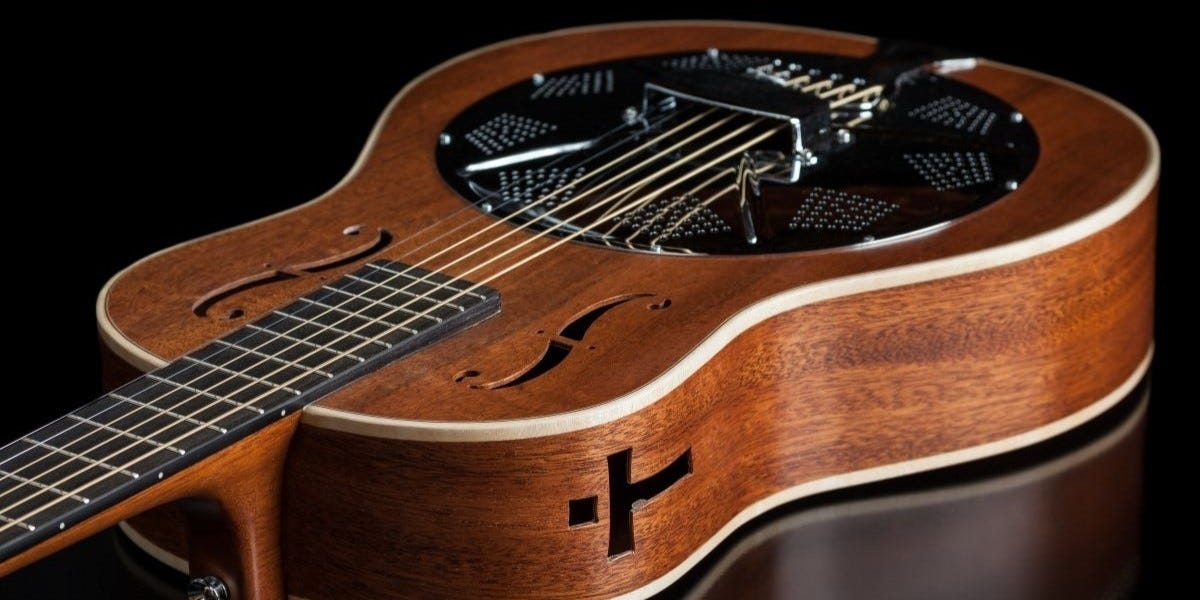
At the heart of the resonator’s sound are the cones. You can think of a resonator guitar almost like a mechanical speaker. On a standard acoustic guitar, the strings vibrate the bridge, which vibrates the wooden top of the guitar to create sound. On a resonator, the bridge connects to the metal cones. As you play, the vibrations are transferred directly into these cones, which amplify the sound through the body and out through the cover plate.
This kind of amplification is what creates that signature bright, metallic timbre. It has a natural reverb and a decay that sounds unlike anything else.
Metal vs. Wood Bodies: Choosing Your Tone
When looking for a resonator, one of the first choices you'll make is the material of the body. Resonators rely heavily on the body material for their character.
Metal-bodied resonator guitars are typically made of steel or brass and are often coated in nickel.
- Steel: Steel bodies tend to produce that cutting, brash tone and have a lot of treble attack. If you want that gritty, swampy Delta blues tone, steel is often the way to go.
- Brass: Brass bodies offer a rounder, mellower tone. They’re still loud and metallic, but the harsh frequencies are smoothed out, resulting in a "sweeter" sound.
Many metal bodies are also etched with intricate decorative designs, making them visually stunning stage instruments.
Much different from regular acoustic guitars that rely on the resonance of the wood, wood-bodied resonators use the wood to "flavor" the sound of the cone. These are typically made from laminated woods rather than solid tonewoods, which provides structural strength to support the heavy cone assembly.
Wooden body resonators are said to be warmer, with a "woodier" decay. They have slightly less attack and punch than steel-bodied guitars, making them a favorite for bluegrass players who want a sound that blends well with banjos and fiddles.
Decoding Resonator Cone and Bridge Types
The cone and bridge configuration is what gives the resonator its signature sound. So it’s important that we make a clear distinction between the different types that resonators use.
Single Cone vs. Tricone
- Single Cone: A single large cone produces a sharp, punchy, "twangy" tone with a quick attack. Think classic Delta blues.
- Tricone: Three smaller cones connected by a T-shaped bar create a warmer, more complex tone with greater sustain. This design produces a smoother sound often favored by Hawaiian players.
Biscuit vs. Spider Bridge
- Biscuit Bridge: A small wooden disc (the "biscuit") sits on an inverted cone. This classic National-style setup is loud, brash, and fundamental-heavy.
- Spider Bridge: An eight-legged metal bridge sits on a cone that faces downward. This classic Dobro style has a distinctive nasal, vocal quality with long sustain, perfect for that "high lonesome" bluegrass sound.
So, get an idea of what type of tone suits your playing best. Some folks really like that distinctive nasal sound that comes from the Dobro’s while others may want to be more mellow with their tone.
Neck Styles: Round vs. Square
Finally, the way you plan to play the instrument will dictate the neck style you need. This is a crucial distinction that often trips up the folks starting out.
Round Neck
The neck profile is obviously rounded, just like a standard acoustic or electric guitar. You can fret chords with your fingers, use a bottleneck slide, or strum it like a regular guitar. This is perfect for blues players who want to switch between slide and rhythm playing.
Square Neck
The neck is pretty thick and square-shaped. The strings are set very high off the fretboard — so high that you cannot press them down to the frets. This guitar rests flat on the player’s lap. This is the standard for bluegrass "Dobro" playing. You use a heavy steel bar to slide along the strings.
Most resonators, including Dobros, use a wooden neck attached to the body (whether the body is wood or metal). This offers a warmer, more traditional feel that most guitarists prefer.
Resonator Guitar Recommendations
Below are some resonators that are solid options, no matter what level:
- Gretsch G9202 LE Honey Dipper Special Resonator Guitar
- Dobro Hound Dog Deluxe Round Neck Resonator Guitar
- Gold Tone PBR Paul Beard Resonator Guitar
- Danelectro 59 Resonator Guitar
It’s important to note that you’ll want to match the tone to whatever style you’re going to play.
Dobro vs. Resonator: Which Is Right for You?
Is it a Dobro or a resonator? Technically, all Dobros are resonators, but not all resonators are Dobros.
Whichever you choose, you’re picking up an instrument with a rich history and a distinctive, mechanical sound that still resonates today. If you have any questions about resonator guitars, feel free to reach out to the AMS Customer Service experts at 800-458-4076.