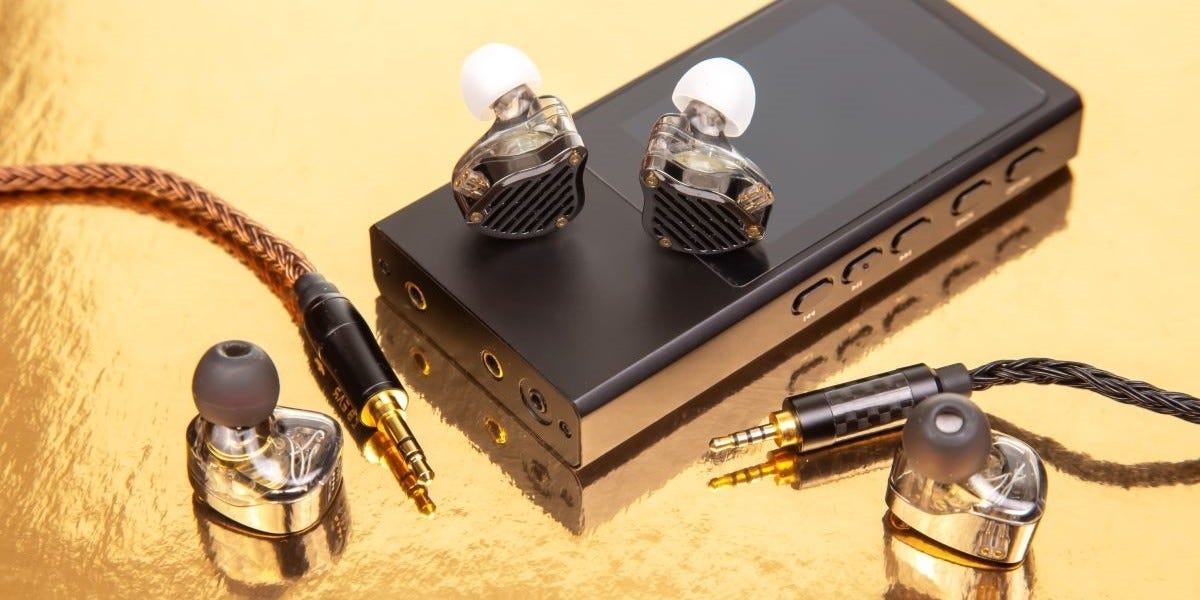
You’ve picked up a great set of in-ear monitors. You’ve listened to your favorite tracks through them, noticed the clarity, the punch, the detail, and now you’re ready to bring that same experience to the stage. But here’s the question every musician hits next: how do you actually get your monitor mix into your IEMs during a live show?
That’s where wireless in-ear monitor systems come in. They’re the bridge between your mixer and your ears — the gear that delivers your personalized monitor mix to you, no matter where you move on stage. Get this part right, and you’ll unlock the full potential of your IEMs, turning great-sounding earphones into a fully functional live monitoring setup.
How the IEM Signal Chain Works
The basic idea is simple: your mixer (either front-of-house or a dedicated monitor board) sends an aux mix to a wireless transmitter, which broadcasts that signal to a bodypack receiver you wear on your belt. Plug your IEMs into that receiver, and boom — your personal mix, anywhere on stage.
It’s essentially your own miniature radio station. The transmitter sends your monitor mix — either in stereo or mono — over a UHF or digital band, and your receiver locks onto it.
In my band, Good for Gary, we run Shure PSM900s using mono mixes through the left and right outputs to cut down on the number of transmitters we need. Melissa and I share one transmitter that feeds both of our bodypacks, and it works flawlessly. Let’s be honest — on a loud stage, when the energy’s high and you’re focused on the performance, a mono mix gives you everything you need. Stereo is nice to have, but it’s not essential for getting the job done cleanly and confidently.
Not everyone needs wireless, though. Headphone amps and small-format mixers are a great way to feed wired IEMs, especially if you’re a drummer, keyboardist, or anyone who doesn’t (can’t) move much on stage. Wired setups completely eliminate radio interference and are very common in house-of-worship settings. You can run a simple cable from a headphone amp or a compact mixer near your position and get a rock-solid, noise-free feed every time.
Entry-Level (Good): Affordable Wireless for Small Stages
If you’re getting into wireless for the first time, there are simple plug-and-play systems that can get you up and running without burning through your gig fund.
The Xvive U4 Wireless IEM System is a favorite among weekend warriors and smaller bands. It runs on the 2.4 GHz band (like Wi-Fi), and it’s super easy to set up — no frequency coordination required. Plug the transmitter into your mixer’s output, clip the receiver pack to your belt, and you’re up and running. The range is solid for smaller venues, and it offers surprisingly good fidelity for the price. If you’re rehearsing, playing bar gigs, or running tracks from a small console, this is a great starting point.
You can also take a slight step up to the Xvive U45 that runs on the less-crowded 5.8GHz band for clearer audio in busy environments.
Another solid entry-level choice is the Galaxy Audio ASD-700 Series. This lineup includes single and twin-pack digital systems that are easy to use, durable, and surprisingly clean-sounding for the price. The ASD-700 Digital UHF Wireless IEM System is perfect for smaller stages and rehearsal setups, while the ASD-700-2 Twin Pack gives you two complete receiver setups from one transmitter — ideal for bandmates sharing a mix. If you want something a little more advanced, the AS-12100 AnySpot adds a rackmount transmitter and EB10 earbuds for a more traditional touring-style rig.
Mid-Tier (Better): Reliable Systems for Working Bands
If you’re gigging regularly, you’ll want something with stronger transmission, wider frequency agility, and better fidelity. This is where systems like the Shure PSM300 and the Sennheiser XS Wireless IEM come in.

The Shure PSM300 is a huge step up from entry-level gear. It’s built like a tank, can provide stereo or mono mixes with rock-solid RF performance, and includes frequency scanning so you can avoid interference before it starts. It’s one of the most reliable wireless systems at its price point, and you’ll see it on stages everywhere from club bands to regional tours. Once you dial in your frequency and gain staging, it just works.
Sennheiser’s XS Wireless IEM is their answer to that same tier: simple, rugged, and clean sounding with digital tuning precision. It’s easy to set up, flexible across frequencies, and delivers great stereo imaging. Both systems sit in the sweet spot for reliability and sound quality without hitting pro-tour pricing.

Pro-Level (Best): Touring-Grade Rigs
At the top of the food chain, you’ll find systems designed for absolute consistency and clarity under any conditions. This is where the Shure PSM900, PSM1000, and Sennheiser EW-D / EW-DX systems live.

In Good for Gary, we run Shure PSM900s for every show, and they’ve been rock solid. We run mono mixes through the left and right outputs, which lets us cut down on the number of transmitters we need. The signal is clean, the range is powerful, and the reliability is the kind that makes you forget you’re even on a wireless system.
We’ve played everything from indoor venues to outdoor festivals in downtown Minneapolis, and dropouts are almost nonexistent. The only time we ever need to re-scan frequencies is in dense downtown environments surrounded by broadcast signals. And even then, the built-in scan feature gets us back in business in seconds.
In my previous band, CherryGun, we ran Sennheiser G3 systems (basically the predecessor to today’s G4). Those were great in their day, and Sennheiser has now taken that legacy even further with their new digital platforms — the EW-D and EW-DX series. These newer digital systems deliver pristine, uncompressed audio with almost no latency, plus app-based control for quick frequency management and device syncing.
If you’re building a professional-grade touring rig, these are the systems that make your life easier and your stage sound consistent night after night.
Personal Monitoring Systems (Networked Mixers)
For fixed-stage setups like churches, schools, and theater installations, networked personal monitoring systems are a powerful alternative to traditional wireless. Instead of sending your mix over radio frequencies, these systems distribute multi-channel digital audio over a network (usually via Cat5e or Cat6 cable). Each musician gets their own stand-mounted personal mixer for hands-on control of their monitor mix.
The Allen & Heath ME Series and PreSonus EarMix 16M are two of the most popular examples.

The Allen & Heath ME-1 mixer lets each performer control up to 16 channels, with tactile buttons, volume knobs, and EQ options. They connect over Ethernet and can daisy-chain multiple mixers from the same audio backbone.
The PreSonus EarMix 16M works similarly, pulling up to 16 AVB channels from compatible mixers like the PreSonus StudioLive series. Each musician gets their own tactile control box with easy access to panning, EQ, and saved presets. It’s a tidy, scalable solution that removes the need for analog snakes or individual wireless transmitters — perfect for houses of worship or stages where players stay put.
Building Your Wireless Mix
Once you’ve got your gear, setting up your wireless mix isn’t complicated, but it does require attention to detail. Start by keeping transmitters away from metal racks and power supplies; they can cause interference. Use fresh batteries or reliable rechargeables for every show. And keep antennas in line-of-sight.
On higher-end systems like the Shure PSM900 or Sennheiser EW-D, use the built-in frequency scan feature before every performance to find the cleanest channel. The five minutes you spend up front will save you from unwanted audio issues later.
Wireless monitoring gear can seem intimidating at first, but once you understand how the pieces fit together, it becomes second nature. Whether you’re using an entry-level Xvive rig, a mid-tier PSM300, or a touring-grade PSM900 or EW-D setup, the goal is the same: clean, reliable sound that lets you focus on the performance. Invest once, dial in your workflow, and you’ll never want to go back to wedges again.
IEM System Frequently Asked Questions
Do I need a wireless system, or can I go wired?
Wired monitoring is a totally valid choice — especially for drummers, keyboardists, and players who don’t move around. Every drummer I’ve worked with uses wired monitoring because it’s consistent, noise-free, and never drops out. A simple headphone amp or compact mixer does the trick, and it’s common in house-of-worship setups where most musicians stay in place.
How far can I roam before losing signal?
Most quality systems give you 200-300 feet of reliable range, depending on interference and antenna placement. Pro systems like the Shure PSM900 or Sennheiser EW-D can push even farther with directional antennas.
What’s the difference between analog and digital wireless?
Analog systems (like the PSM300) transmit using modulated radio signals, while digital systems (like EW-D, EW-DX, PSM9000 or PSM1000) convert your mix into a digital stream before transmission. Digital delivers cleaner sound and better dynamic range but can be pricier.
How do I avoid interference?
Always run a frequency scan before each show and avoid placing transmitters near Wi-Fi routers or metal surfaces. Keep antennas visible and elevated when possible.
What if I want to control my own mix on stage?
If you’re performing in a fixed environment, consider a personal monitoring system like the Allen & Heath ME-1 or the PreSonus EarMix 16M. These stand-mounted mixers let each musician adjust their own mix with tactile knobs — no RF worries, no latency, and no need to flag down the engineer mid set.
Another increasingly popular approach is using a mobile app tied to your digital mixer. Many rackmount and console mixers — like the Midas M32 series — offer companion apps that let each musician control their own monitor mix from an iOS or Android device.
In Good for Gary, we use the M32-Q app with our Midas rack unit, and everyone dials in their own mix right from their phone. It’s fast, intuitive, and keeps the stage workflow simple. Similar apps exist for other mixers too — PreSonus UC Surface, Allen & Heath OneMix, and Yamaha MonitorMix — each giving performers direct control over their monitor sends without touching the main mix. Whether you go with a dedicated personal mixer or a connected app, having control at your fingertips is a total game — changer for modern stage setups.