In today’s creative landscape, the more music you play and the more projects you take part in means more equipment that you’ll be working with. It could be common standards like microphones and amplifiers, specialized professional instruments and devices in the digital realm, or even some odds-and-ends like vintage consumer audio equipment, homemade sound generation tools, and refurbished instruments with modifications.
What do they all need to work? Cables.
This little piece is your introduction to the different types of audio cables and what they’re commonly used for. After reading, you should have a good grasp on what types of cables are needed for your situation and what to look for if you decide to expand into the realm of the unconventional.
XLR Cables
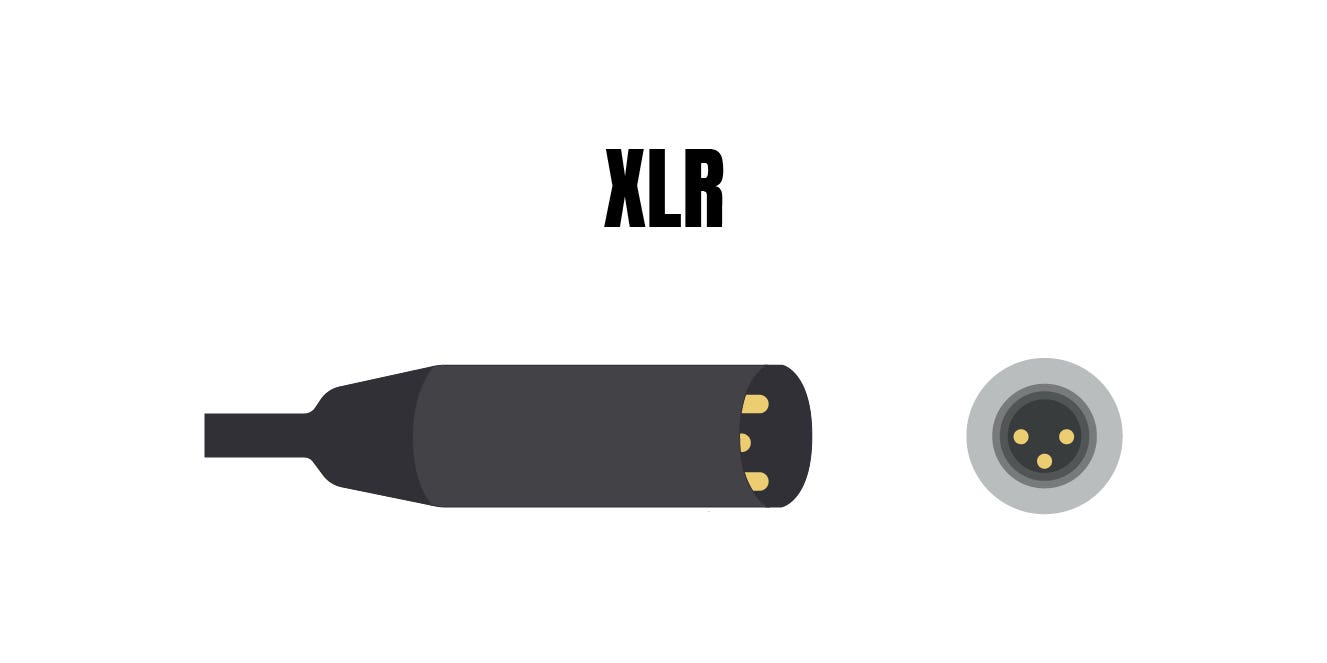
Ah yes, the foundation of any collection of cables: the commonplace XLR cables for a “balanced signal.”
The ground pin and level of shielding helps to eliminate noise and minimize the effects of audio interference, especially when needing long cable runs (25 feet or more). Whether you’re recording or running a live sound setup, it’s important to have plenty in these in a variety of lengths.
Examples of use: Vocal and instrumental microphones, inputs and outputs on mixing consoles, audio interfaces, larger PA speakers, and certain digital instruments. Direct outputs on multi-effects units and modern amplifiers for guitar, bass, or keyboard.
1/4” TRS Cables
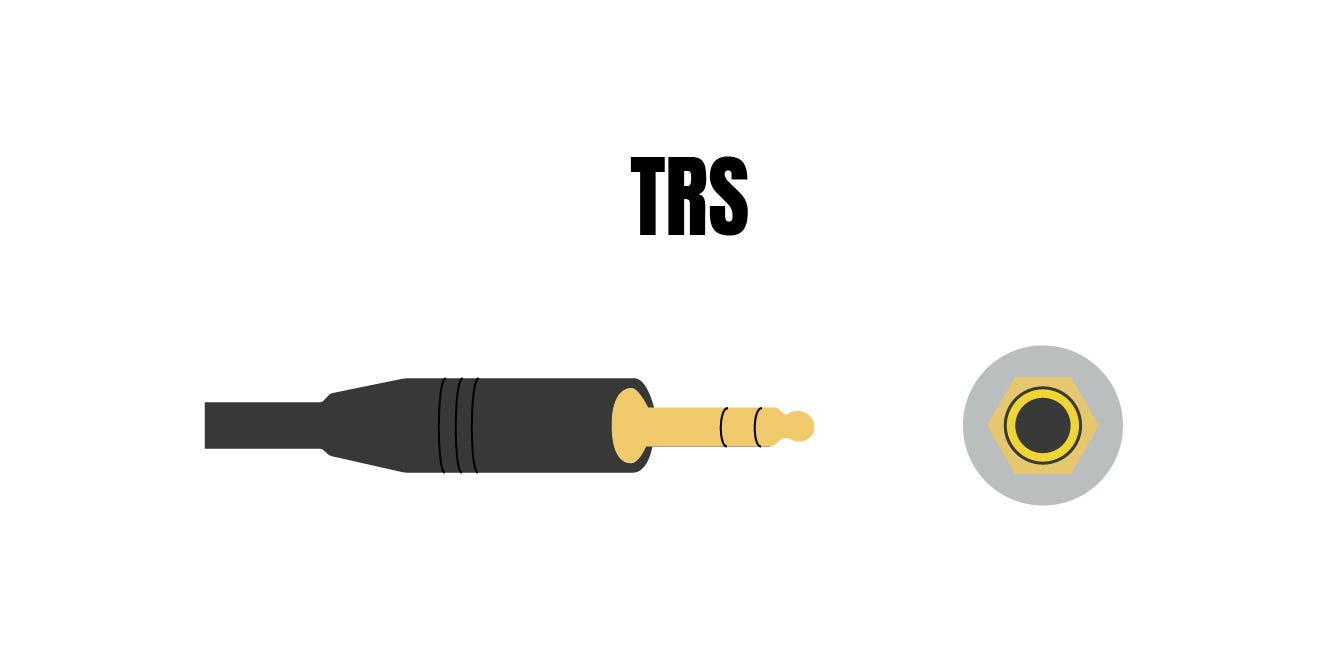
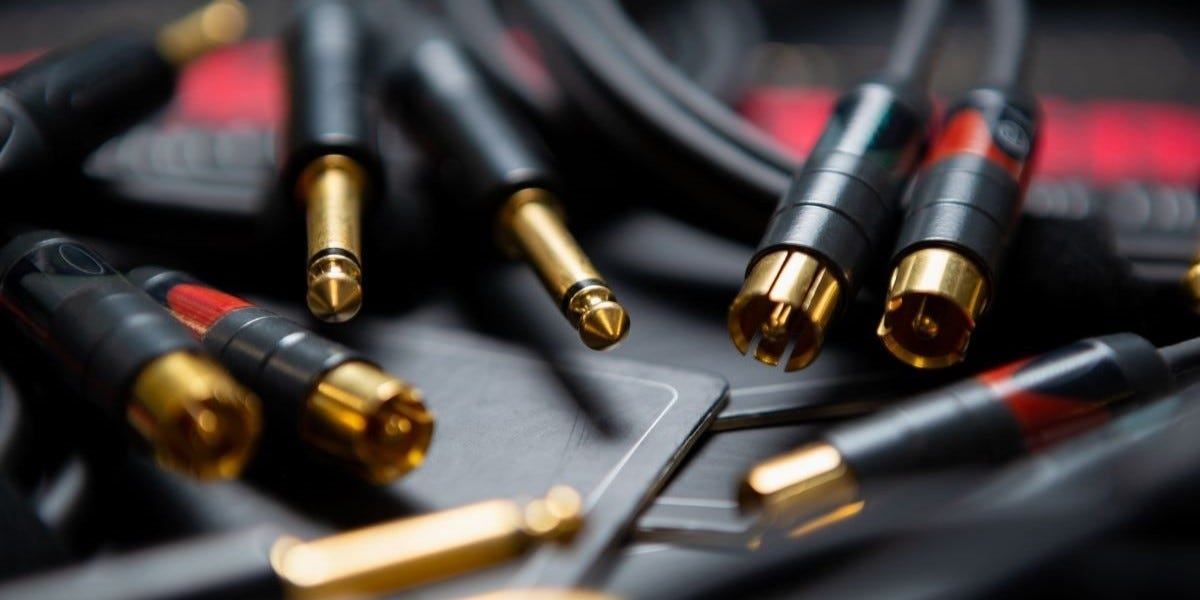
The TRS cable has old-school “phone-jack” style plugs and is the 1/4” equivalent of an XLR cable, designed with a (T)ip-(R)ing-(S)leeve build for the same “balanced” connection. These have two rings location on the body the plug, as opposed to just one ring found on common 1/4” instrument cables that look similar at first glance.
Examples of use: Inputs on general PA speakers and studio monitor speakers, Stereo Outputs on nearly all keyboards, synths, samplers, and drum machines. Main and Auxiliary (AUX) Outputs on smaller format mixers and audio interfaces.
1/4” TS Cables (Instrument Cables)
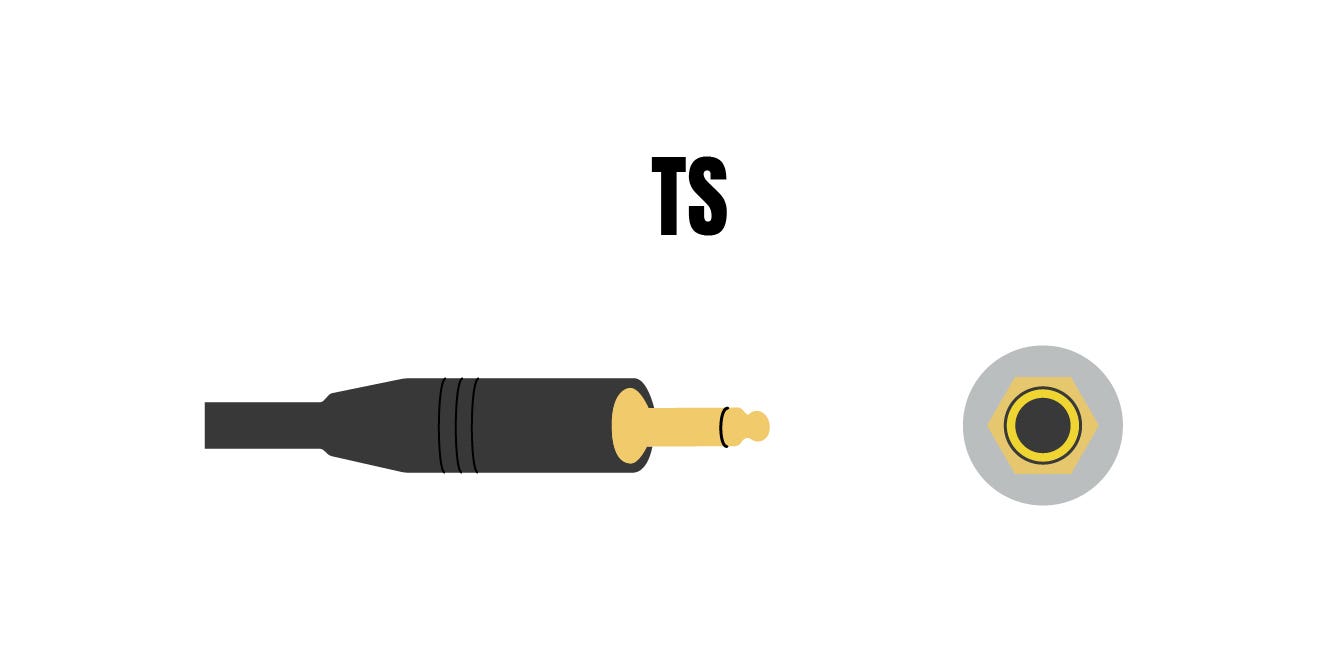
Instrument cables are designed to connect guitars, basses, and keyboards to their specific amplifiers, either directly or through a pedalboard setup. These 1/4" plugs are just (T)ip- (S)leeve and have a single ring at the top of the plug. And since they’re “unbalanced,” TS Cables work best in shorter lengths, as they don’t have a ground connection and are more susceptible to electric interference from the surrounding environment that can manifest as hum or noise.
Examples of use: Instruments (typically guitars and basses) into amps/pedalboards. Also used to connect pedals on a pedalboard.
3.5mm TRS Cables
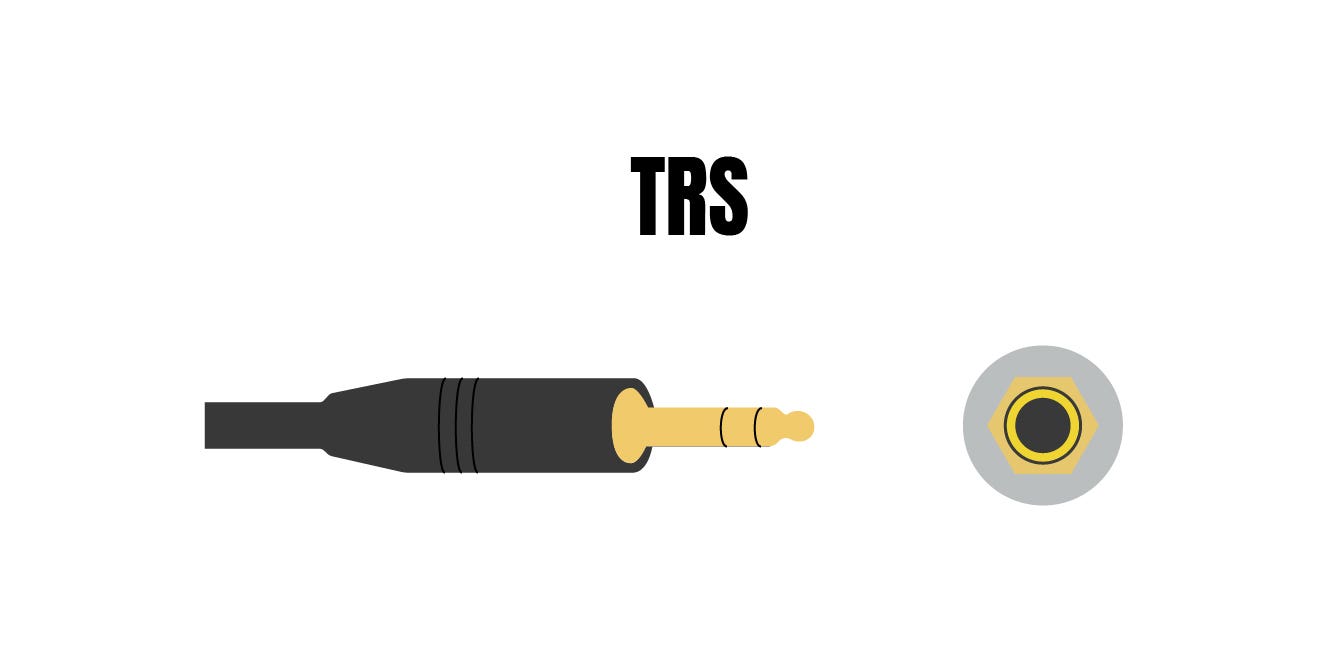
3.5mm (or 1/8in) balanced stereo cables work just like TS or TRS cables, just in a smaller form-factor. (That's why the picture is the same. Just imagine it's smaller!) Since this size of cable is most commonly found on audio headphones, they are sometimes called headphone cables, even though they serve many more purposes.
There are several mixing consoles that have a direct 3.5mm stereo input channel, so you can connect a phone, tablet, laptop, or audio device to play background music or break music in between a performer’s sets. Remember, modern smartphones and tablets have phased out the direct 3.5mm headphone output, so you’ll need to purchase the appropriate USB-C-to-3.5mm or Lightning-to-3.5mm adapter to make that work.
Examples of use: Headphone outputs, computers/laptops, devices like a phone or tablet(with an appropriate adapter), very small format synths and pocket drum machines
RCA Cables
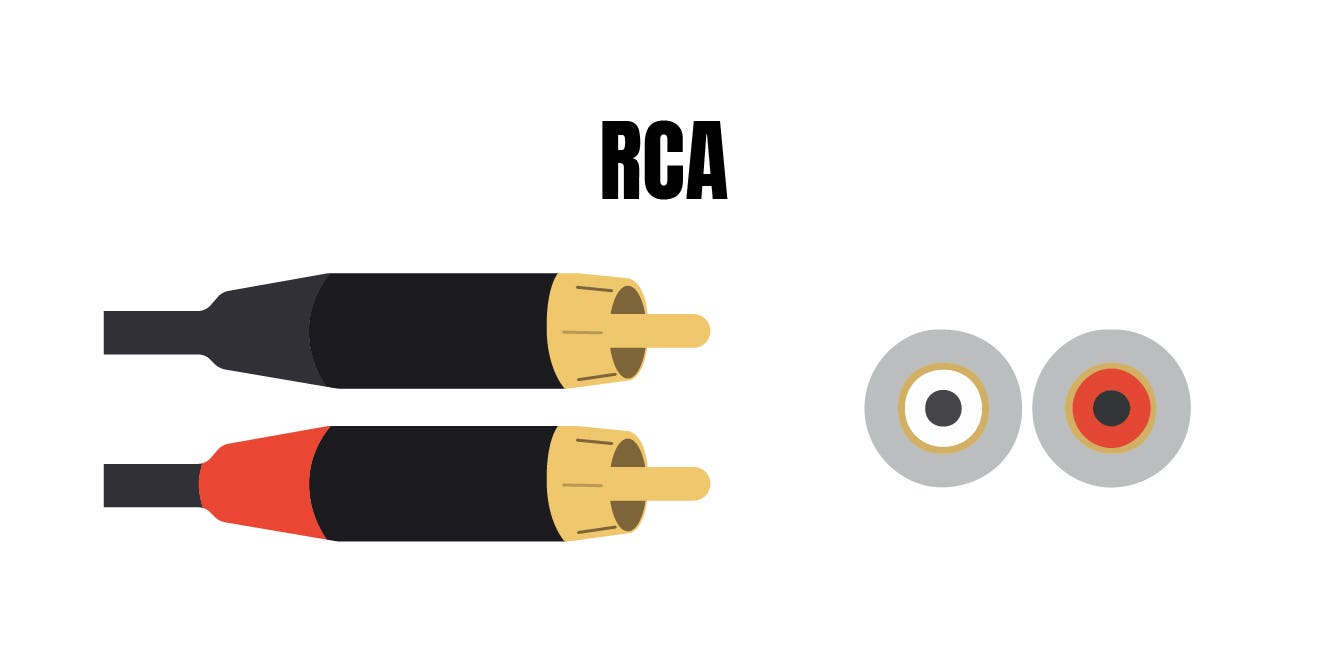
Known for their trademark red and white plugs grouped in a stereo pair, RCA cables are unbalanced line-level connectors designed to transmit signal that’s weaker than professional line-level signal from professional audio equipment and instruments through 1/4" TRS cables. Consumer audio devices and some smaller, more mass-marketed instruments and creative tools in the 1980s, 1990s, and 2000s required the use of RCA cables.
Examples of use: Turntables, CD and Cassette Tape decks, pre-HD video game systems, certain types of keyboards, and inputs and outputs on mixing consoles that can be used with an additional stereo source (such as a portable digital recorder).
AMS Will Hook You Up with the Right Cables
Live performances, creating in the studio, and jamming in the practice room or rehearsal space require your equipment to be connected properly to ensure consistent sound and maximum sonic clarity. Having these types of cables in a setup is a must for any musician, and AMS is the place to bundle a complete collection and take advantage of one regular monthly payment using a 0% interest payment plan.
Single cables, interconnect cables (from one cable type to another), multi-cable snakes, adapters, and couplers of all different types are in stock and ready to ship, so you can be ready to connect up your newest gear piece in no time!