There’s no one-size-fits-all when it comes to guitar pickups. Are you after that vintage warmth or that crystal-clear cutting punch? Do you need clarity for clean tones or aggression for distortion-heavy riffs? Understanding how guitar pickups work will help you choose the right type for your musical goals.
What Is a Guitar Pickup?
The age-old question for those who aren’t familiar with the components that make up the guitar… What is a pickup? A guitar pickup is essentially just a magnet. It’s the first piece in your signal chain where the vibrations from your guitar strings get “picked up,” turned into an electrical signal, and sent from your guitar to your pedals and amp. It’s the first stage of your guitar sound getting projected out for all to hear.
Now, you might ask “Yeah, but what is it made of exactly?” Pickups are composed of three essential pieces: magnets (pole pieces, bar magnets, or both), coiled wire, and structural elements called bobbins that hold the first two bits together.
How Do Guitar Pickups Work?
If you're wondering how guitar pickups work, you're not alone! It's one of the most common questions among guitar players and enthusiasts. Pickups function by converting string vibrations into an electrical signal that can then be amplified and shaped into the sound you hear through speakers.
A typical pickup consists of a magnet wrapped in a coil of copper wire. This creates a magnetic field around the guitar strings. When you strike and make contact with the string, it vibrates and creates an electrical current in the coil which is known as electromagnetic induction. The resulting signal mirrors the frequency and dynamics of the string's vibration and is sent to your guitar amp for sound output. Now that you just got the engineering experience, we can discuss further the various kinds of pickups that you’ll find in guitars!
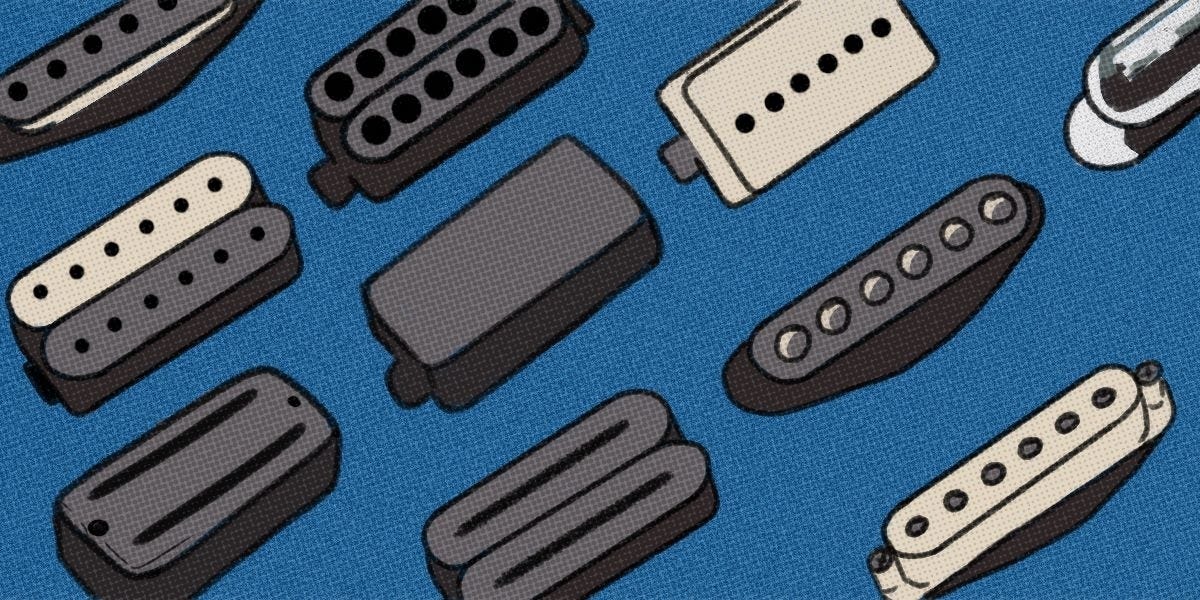
What Are the Different Types of Guitar Pickups?
Now, choosing the best pickups for electric guitar can drastically influence your guitar tone, so it’s ideal to take note of what kind of sound you’re aiming for ahead of time. Tone sculpting has been at the top of every guitarist’s list since the beginning, and pickups are one of the key factors that contribute to this.
Single-Coil Pickups
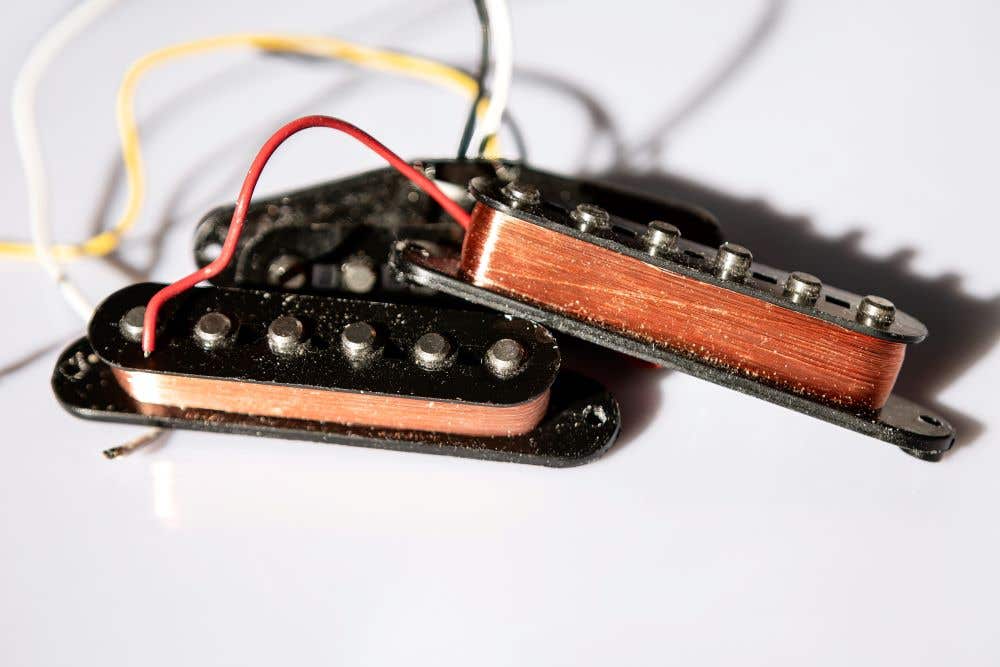
Single-coil pickups are known as the original electric guitar pickup design, producing a bright, articulate sound. Although they can be prone to creating quite a bit of noise, especially the 60-cycle hum that gets magnified under a high-gain setting, single coils never fail to deliver that twangy articulate sound that we all know so well.
You can find single coil pickups on practically any type of guitar but most famously on Fender Stratocaster and Telecaster bodies. You might be putting two and two together and understand how country music gets its signature twang sound. It’s the magic of single coils!
Below are some key points on what you can expect from single coil pickups on your guitar:
- Chimey and bright – The clarity will have you claiming your position within any sonic mix.
- Articulate and snappy – You’ll have an unmatched attack upon striking your strings, which is great for those who rely on intricate picking patterns.
- Noisy – From that 60-cycle hum, even the neighbors can hear it…
There’s a reason why so many guitar players still single after all these years. They’re great for many different styles of music.
Humbucker Pickups
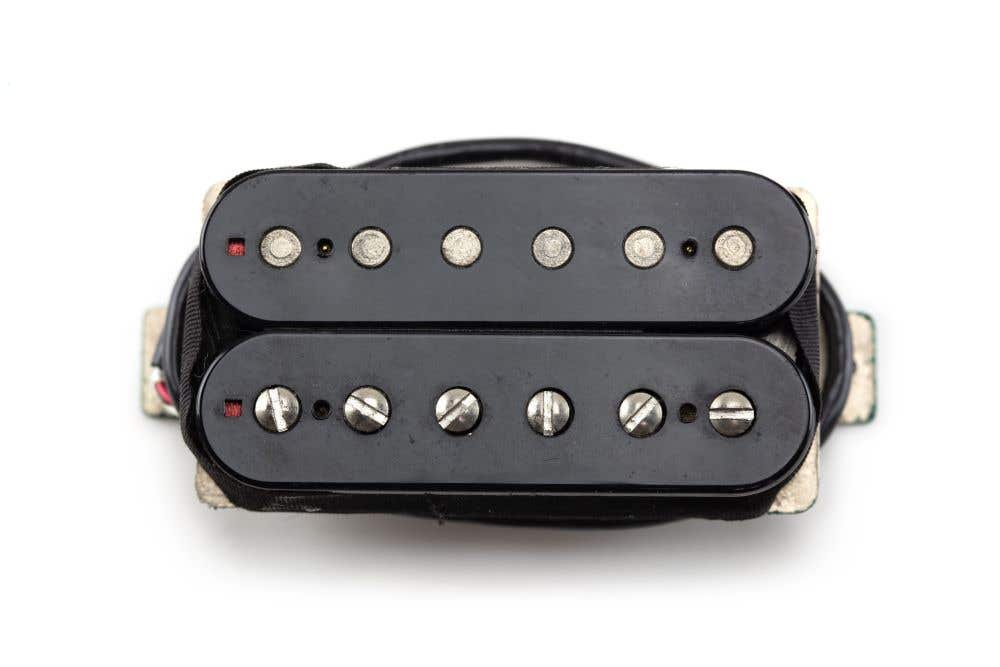
Any alternative to the above mentioned? Humbucker pickups, which feature two coils side by side wired in opposite polarity to cancel out the hum (“bucking” the hum). This process is also referred to “out of phase.” Now it makes sense why these pickups were coined the term “humbucker.”
Humbucker electric guitar pickups make an excellent choice if you’re playing rock, metal, jazz, and heavier genres that require a richer and fuller sound. But that’s just the starting point. Humbuckers work for pretty much anything else, too.
Let’s take a look at some of the tonal options that humbuckers offer:
- Higher output – More output means more sustain, which is great especially if you’re cranking amps into overdrive territory.
- Thick and warm – Talk about the warmness and fullness of sound. Humbuckers give you that midrange presence and low end response that screams “smooth.”
- Noise-free – These are much quieter than single coils since there’s no 60-cycle hum. What a relief!
Great lead tones and an excellent base as part of the rhythm section, humbuckers make a great choice if you’re looking for smooth and dark cleans, high-octane gain, or really anything in between.
P-90 Pickups
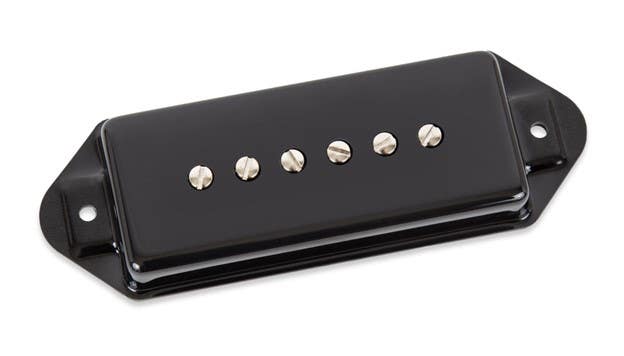
Ahh, P-90 pickups. P-90s were first introduced by Gibson in the late 1940s and are a type of single coil pickup that provide a unique tonal character which makes them highly sought after. These pickups are very versatile and are a great middle ground between traditional single coils and humbuckers, giving you more clarity and sharpness of the single coil sound, while still enough to retain that fullness and warmth that comes from humbuckers.
Initially, P90s were set up on jazz guitars like the ES-125s and 150s in the early days and saw a resurgence again in the 90s with the popularity of grunge and gritty rock.
Here are a few tonal highlights that P90s bring to the table:
- Warmth and grit – Want to go vintage? Need some extra crunch in your sound? Yeah, I thought you would. P90s give you an excellent platform.
- Midrange presence – Add more depth to balance out your tone.
- Versatile and dynamic response – Glassy and articulate highs give great detail to your picking and soloing
The thick, yet articulate tone makes this a guitar player’s favorite. There are two variations that P90s come in:
- Soapbar P90s – a rectangular-shaped pickup often found on Les Paul Juniors and Specials.
- Dogear P90s – You’ll see the mounting ears on these where they screw into place (like in the picture above), thusly landing it the name “Dogear.” You’ll see a lot of these on SGs and vintage ES models.
P90s will have a special place in the hearts of guitarists who are drawn by versatility and vintage expression.
Lipstick Pickups
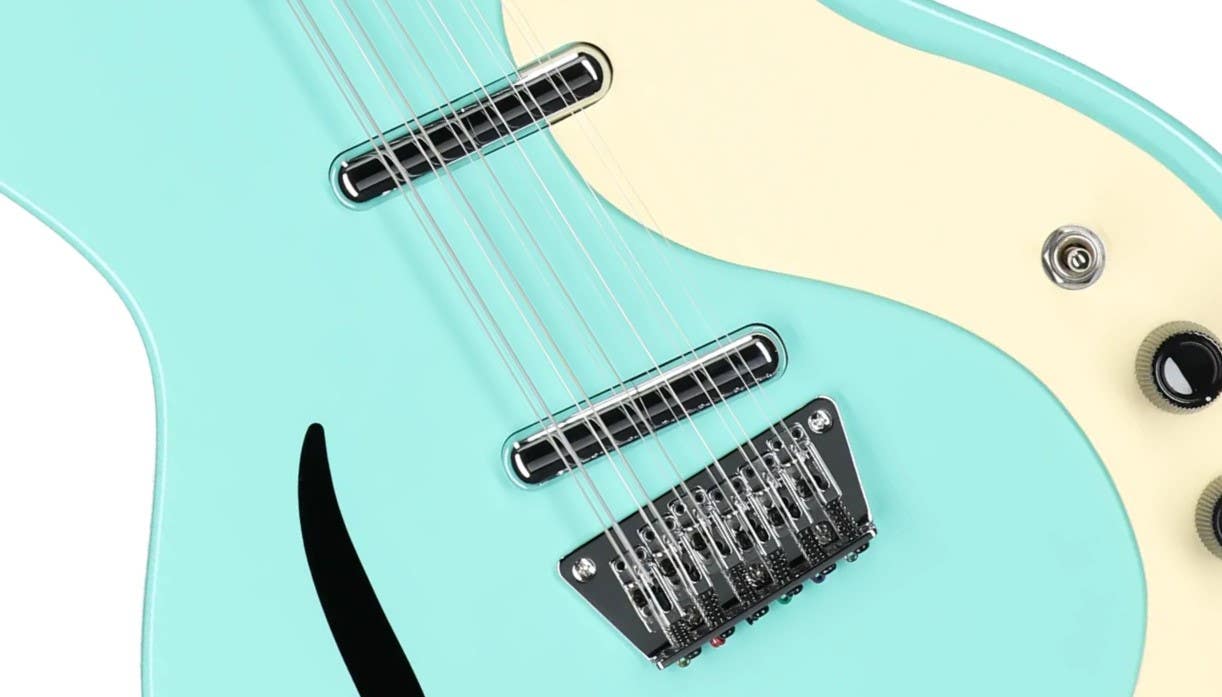
One of the types of pickups that has remained in the shadows for so long has been lipstick pickups. Originally designed and built by Nathan Daniel of Danelectro, lipstick pickups were actually made from lipstick tubes that Nathan was able to get a hold of. The making of these pickups started from wrapping a bar magnet in copper wire, without the help of a bobbin, which was then sealed in wax and lacquer.
One of the key differences that set lipstick pickups from a single coil pickup is the fact that single coils are held in a bobbin by magnets as pole pieces, which are then wrapped in copper wire. You can visually see that these have a cylindrical shape, much different than other shapes of pickups that have been introduced.
Lipstick pickups are more ragged and slightly dirty, with a looser, jangly tone which is great for rhythm playing. Here’s what you can expect from having a set of lipstick pickups in your guitar:
- More grit and dirt – Slightly dirtied clean sound or ragged over-driven sound.
- Looser low-end and scooped mids – helps outline all of the chords in your rhythm playing.
- Trebly and Jangly top end – similar to single coils but looser.
Next time you come across a Danelectro guitar, or any guitar that has pickups that look like a lipstick bottle, chances are they’re lipstick pickups.
Hot Rails

Redefining what single coil pickups had set into place, hot rail pickups became the ultimate level up for those looking to maximize versatility, emphasize mid-range tone, and reduce noise. Many players who favor playing rock and metal will find that these effortlessly fit the mold. However, that doesn’t exclude anyone playing blues, jazz, fusion, or for that matter, any context under the sun. When rolled back, you'll get plenty of clean tones, allowing you to take both sides of overdriven, searing leads to clean and sparkly note articulation.
One of the driving reasons behind the hot rails pickup’s popularity is their higher-gain sound that cuts through the mix, without the noise issues that are usually present. Here’s some key points behind the hot rail pickups' character:
- Emphasized mid range – exactly what’s needed to make sure your guitar cuts through the mix.
- Crunchy and Saturated tone – perfect for searing leads and saturated distortion.
- Noise-reduction – high-gain sounds usually produce a lot of noise, now you don’t have to worry.
Hot rails come with a variety of wiring configurations that essentially can split dual coils into single coils via push-pull from the potentiometer on the guitar’s volume and tone knobs, helping you maximize your sonic power. When wired in series, you’ll get a tone with hotter output, while parallel allows a more open and cleaner sound, reduced in output. You can have the best of both worlds with a set of hot rails.
Active vs. Passive Pickups
Pickups, whether they’re single-coils, P90s, or humbuckers, will fall into two different categories: active or passive.
Passive pickups are the most common type of electric guitar pickup. They’re just made of coil wires wrapped around a magnet. They use magnetic induction, like we stated before, and produce the organic, warm and vintage sound that has been a standard since the beginning. They don’t require any external power sources. Just plug them in and go!
What are active guitar pickups? Active pickups are pickups have a similar coil-and-magnet structure like passive pickups, but they have a low-impedance preamp which boosts and cleans the signal — but it also means they need an external power source, typically a 9V battery. Crisp highs, tight lows, and compressed dynamics make active pickups truly one of a kind. And with their higher output, they’re great for super-heavy distorted tones. Metal players can’t get enough of them!
Just make sure you change your battery before your set… I had the luxury of having mine die on me in the middle of a song… never forget!
Magnet Types: Alnico vs. Ceramic
Just when you thought it couldn’t get deeper than this, it does… ha! Even the type of magnet can affect your pickup tone. Pickup magnets are put into two categories: Alnico and Ceramic.
Alnico magnets are alloys made primarily of aluminum, nickel, and cobalt, which have been a staple in guitar pickups for decades. Unlike Alnico magnets, ceramic magnets are made from synthetic materials, such as strontium or barium ferrite.
Alnico II
Among the Alnico series, Alnico II is known for its low cobalt content, which gives pickups a warm, smooth, and vintage character. These magnets produce a softer attack and usually a lower output, resulting in a rounder, more mellow tone with less bite and a slightly compressed sound. Because of these qualities, Alnico II magnets are commonly found in vintage-style single-coil pickups and PAF-style humbuckers.
Alnico III
Sitting a step below in magnetic strength, Alnico III magnets contain even less cobalt than Alnico II. This results in a softer, glassy tone with airy lows and rich mids. Pickups equipped with Alnico III have a very gentle, ethereal character. Although relatively rare, Alnico III magnets have been used in older Gibson PAF pickups and some vintage-style single coils, so if you’re seeking a delicate and vintage-inspired tone, look no further.
Alnico V
At the stronger end of the Alnico spectrum, Alnico V magnets contain a higher cobalt content. These types of magnets produce a brighter, more aggressive, and dynamic tone with clearer highs and stronger midrange presence. They have higher output than Alnico II and III, which makes them a popular choice for pickups designed for rock, hard rock, and heavier styles. The stronger magnetic pull tightens the bass response, adds more attack, and improves overall string response. Because of their versatility and punch, Alnico V magnets are commonly found in many modern pickups.
Alnico VIII
Even stronger than Alnico V are Alnico VIII magnets, which have the highest cobalt content in the series. These magnets deliver the strongest magnetic pull and the highest output, producing a powerful, focused, and tight sound. While the intense magnetic field can sometimes dampen string vibration, it leads with a punchy tone and excellent sustain. Alnico VIII magnets are less common but are typically used in high-output humbuckers aimed at aggressive or heavier playing styles.
Ceramic
Ceramic magnets offer a very different tonal palette, asserting brightness, power, and aggression. Pickups with ceramic magnets deliver strong bass punch and midrange presence, making these ideal for high-gain settings like metal, punk, and rock.
Ceramic magnets provide very high output and a sharper attack, which results in a more “hi-fi” or modern sound. However, this can sometimes be viewed as harsh compared to the vintage warmth and softness that’s associated with Alnico magnets. Despite this, ceramic magnets are valued for their consistent performance, especially where there is a demand for clarity and power.
Acoustic Guitar Pickups
We can’t forget the acoustic world of guitars; they’re need to be amplified, too! Acoustic guitar pickups can be put into one of two categories: magnetic soundhole pickups or transducer pickups.
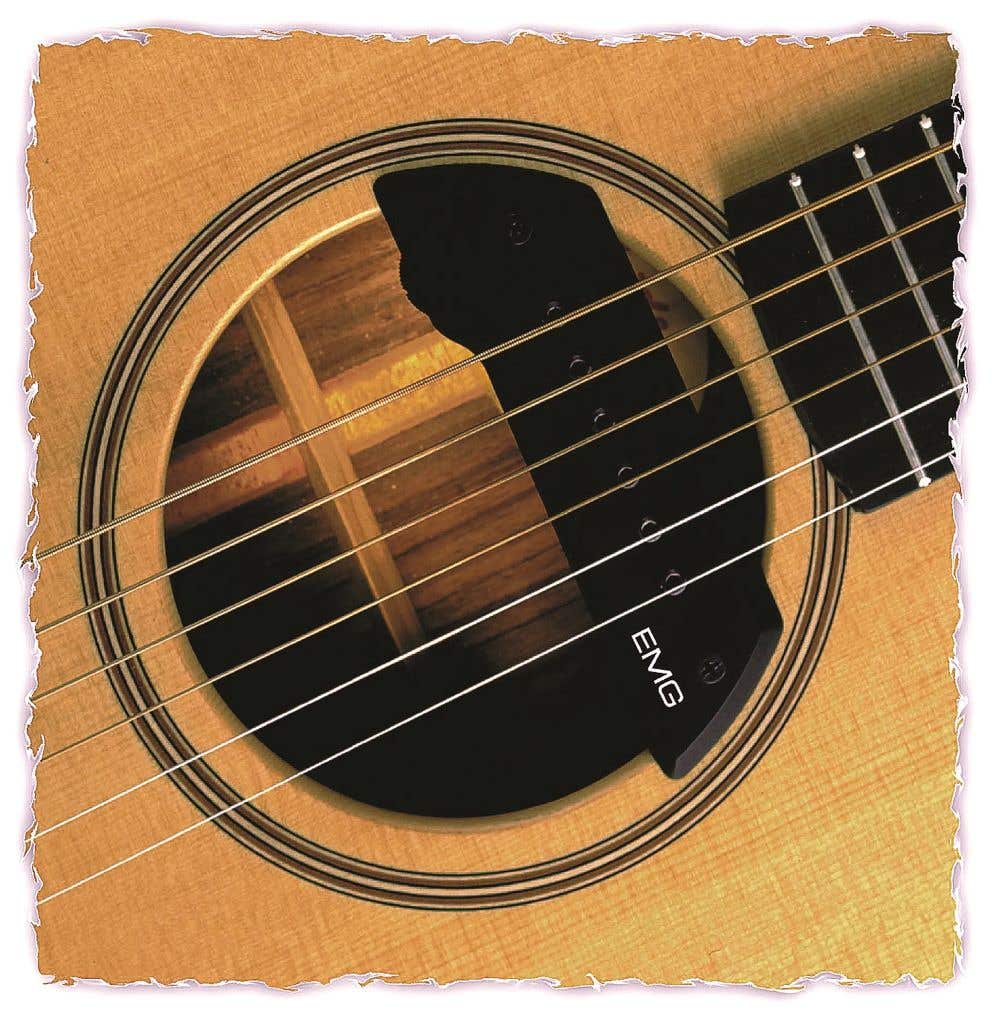
Magnetic Soundhole Pickups
These pickups work like traditional electric guitar pickups considering the use of magnets and coils to detect string vibrations. Because of this, they mostly capture string vibration and don’t capture much of the guitar’s body resonance, so the tone can have a more artificial characteristic and sound less “acoustic.”
Soundboard / Body Transducers
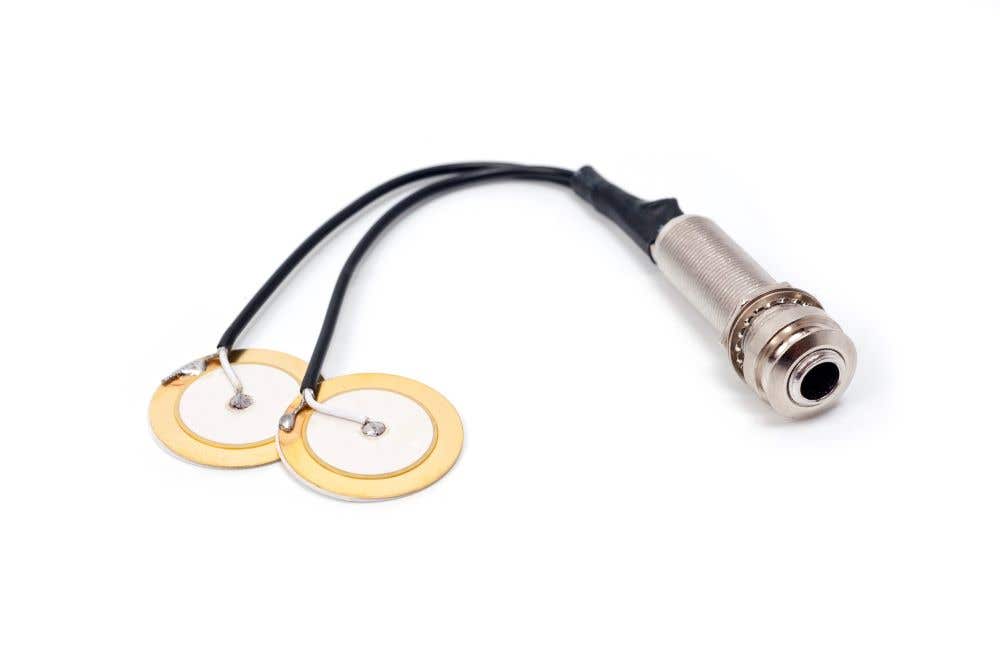
These are specialized pickups (often even piezo-based) that are attached directly to the guitar’s soundboard. Piezo pickups are typically installed under the saddle or bridge of the guitar. They pick up vibrations from the guitar body, delivering a more natural, warm, and dynamic tone. Because they capture the wood’s resonance, they provide a richer sound but can be more prone to feedback at high volumes.

Microphone Pickups
Internal microphone pickups use small condenser or electret microphones placed inside the guitar body to capture the actual acoustic sound. These pickups offer the most natural and authentic tone, capturing air resonance and subtle nuances, but they are very sensitive to feedback and ambient noise, making them best suited for studio recording or quiet settings.
Many acoustic guitars have both piezo and internal microphone pickups to give them a full, rich amplified acoustic tone.
Guitar Pickup Recommendations
Below are some pickups you might be interested in checking out:
Single coil
- Seymour Duncan SSL1 Vintage Staggered Single Coil Pickup
- DiMarzio DP415W Area '58 Stratocaster Single Coil Pickup
- Fender Pure Vintage 57/62 Stratocaster Pickup (Set of 3)
Humbuckers
- Seymour Duncan SH4 JB Model Humbucker Pickup
- Mojotone '59 Clone Humbucker Pickup
- Gibson Original 57 Classic Pickup Double Black
P-90
- Gibson Original P90 Soapbar Pickup
- Seymour Duncan SPH90 Phat Cat P90 Pickup
- Mojotone '56 Quiet Coil P-90 Soapbar Pickup (Set of 3)
Hot Rails
- Seymour Duncan SHR1 Hot Rails Pickup
- Seymour Duncan Hot-Rodded Rails Humbucker Set
- Seymour Duncan Scott Ian El Diablo Rail Humbucker Pickup
Acoustic guitar pickups
Pickup or Not to Pick-up
It can’t be stated enough that different pickups will color your sound and have a big impact on how your tone is shaped. Your best bet is to pick out a few guitars, play them, and observe the tonal response. If you’re into some Texas-Blues, maybe single coils would be preferred over humbuckers. Or if you want to really rock out, get some high-output humbuckers. Who knows!? just learn what you like best. At the end of the day, it’s up to you. You can sculpt an amazing tone no matter which pickups you end up using.
If you have any more questions or need some help with where to look, feel free to reach out to the gear experts on our AMS Customer Service team at 800-458-4076. No matter what you questions or concerns you have, you can be rest assured we’ll have the answer. In the meantime, you can browse all the goodies right here at AMS for more details, models, ideas and exclusive offers!