The polar pattern of a microphone describes the area around the mic that it can hear or “pick up” sound waves. In a perfect world, if you had a tuned soundproof room, you would only need one omnidirectional microphone to record most of your tracks. Since most of us don’t work in such an environment, we need to contend with imperfect acoustics, background noises, and crosstalk from multiple sound sources (think drum kit).
Live sound presents a much more complex situation for sound reinforcement, monitoring, and recording, which brings the need for many types of polar patterns. Think of it more as controlling what the mic is not listening to while capturing the parts you want. With that in mind, let’s look at how different polar patterns work and when to use them.
Omnidirectional
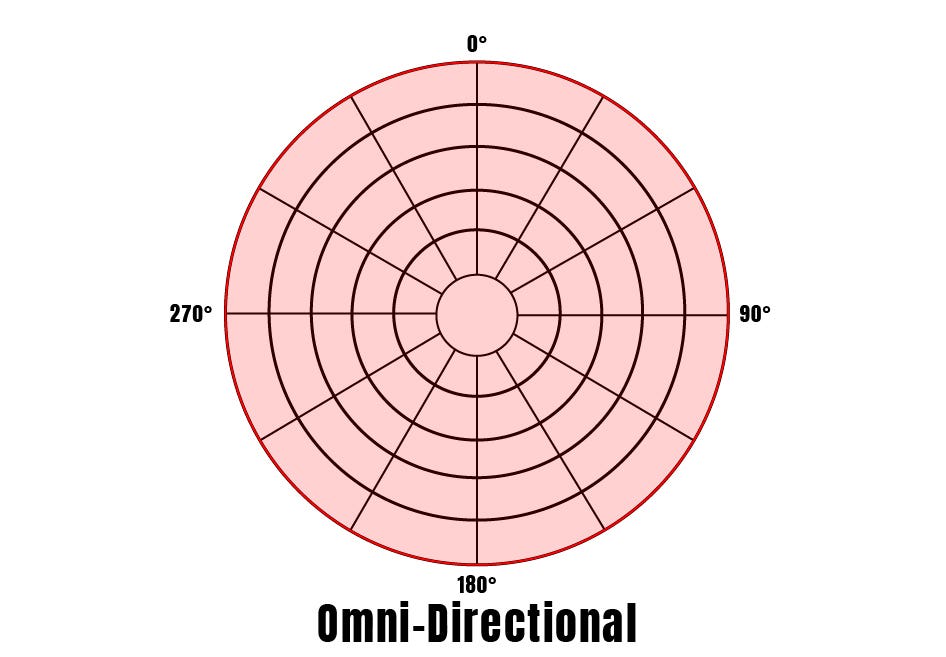
As the name describes, this pattern is listening in all directions, making this an ideal mic to use if you want to capture the ambience of a room. It’s also very useful for capturing groups of vocals, strings, and horns.
Aside from overhead drum mics, omnidirectional mics are very rarely used for live sound as they are not just prone to feedback — it’s almost guaranteed! You’ll often see a single omni mic hanging high over the stage, providing balancing ambience for the in-ear monitor systems but not run in the main mix.
Omnidirectional mics have the least self-noise of any polar pattern.
Popular Omnidirectional Microphones

Rode Reporter Omnidirectional Dynamic Interview Microphone
Special Price $153.59
Sennheiser MKH 8020 Omnidirectional Small Diaphragm Condenser Mic
Special Price $1,499.00

Cardioid
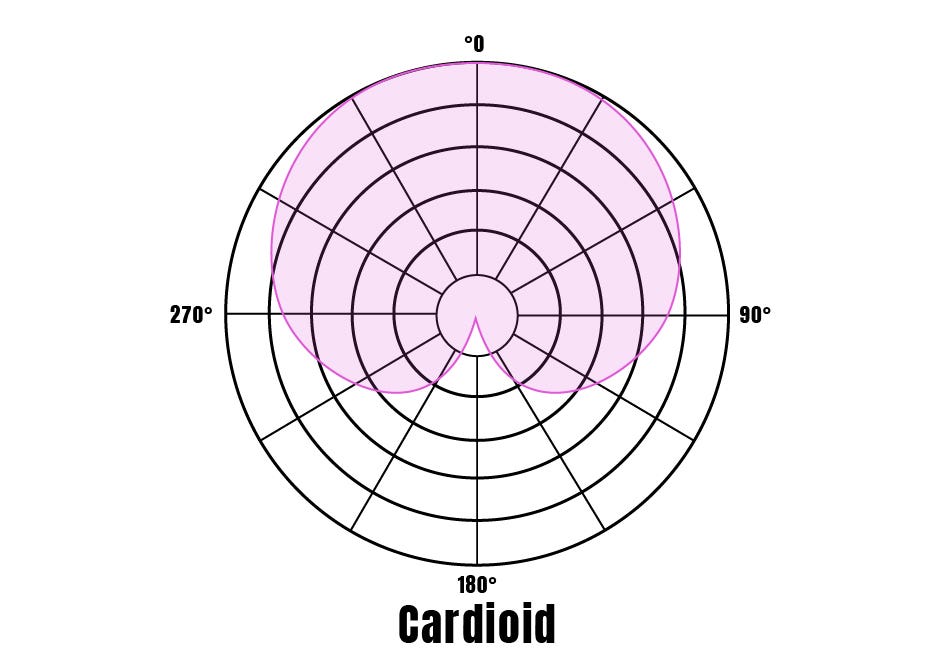
Based on the Latin word for heart, a cardioid microphone has a heart-shaped polar pattern. It’s designed to listen to the address side (front) of the mic element, reject some info coming in the sides, and reject everything from the rear, making it an ideal choice for live vocals using floor monitors.
While cardioid mics can still experience feedback in a loud environment, they have a bigger “sweet spot” for the vocalist who won’t stay still. Think about a pickup area the size of a volleyball. Cardioid mics are great for live vocals, amps, horns, and percussion.
Popular Cardioid Microphones

Hyper-Cardioid
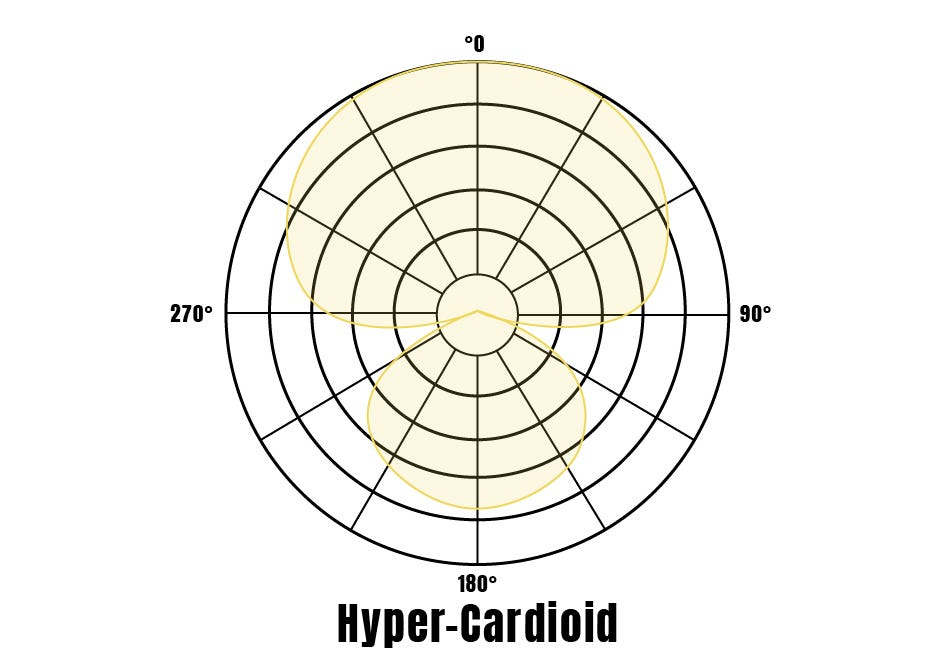
A hyper-cardioid pattern rejects more side input, allowing a small amount of pickup from the rear, making the mic extremely feedback resistant.
The downside to hyper-cardioid mics is that the address side pickup area is also smaller — picture a softball. If the vocalist backs up even a little, the mic will lose them.
This pattern is useful for live vocals but also helpful close mic’ing toms in a drum set (less cross talk) and guitar cabs.
Popular Hyper-Cardioid Microphones

Super-Cardioid (Unidirectional)
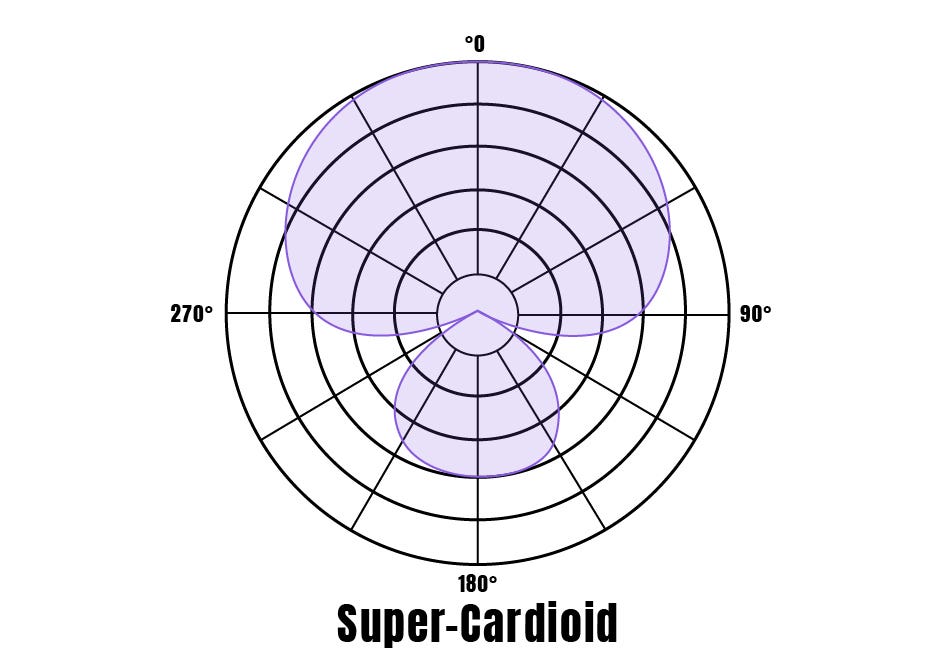
Now tightening the pattern into an even smaller shape, picture a tennis ball, a super cardioid microphone is similar to a hyper cardioid but with slightly less rear pickup. They’re great for high-volume applications where cross talk and bleed are a problem, like vocals in a high-stage-noise environment, close mic’ing a single drum or guitar cab, or anything completely stationary. Super cardioids don’t like when sound sources move away from them…
Popular Super-Cardioid Microphones

Shure NXN8/S Nexadyne Dynamic Supercardioid Microphone Black
Special Price $329.00


Figure Eight (Bidirectional)
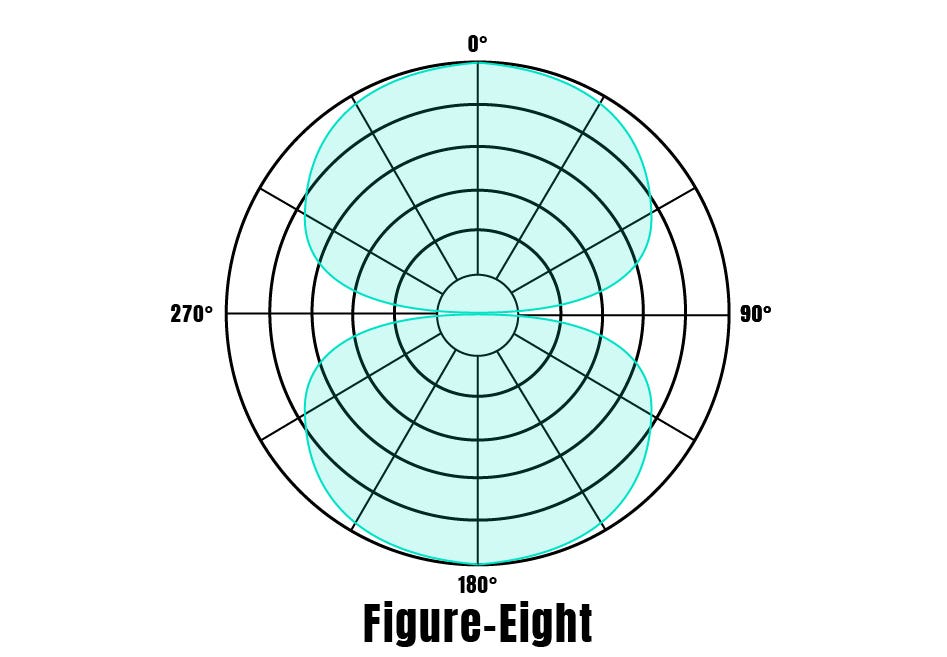
As the name implies, the figure eight or bidirectional polar pattern squeezes off the sides so effectively that it forms an equal lobe in the front and rear. This pattern can be useful for recording duets.
A cool application for a bidirectional mic would be to set up the mic in front of a reflective surface, such a glass window or tile wall, and position the vocalist facing the window. The distance between the window and the mic will determine the amount of time for the shimmery, phased slap-back to occur. Since this pattern rejects any side input, you could use two mics horizontally to record vocals and acoustic guitar discretely in the same take.
Popular Bidirectional Microphones

Sennheiser MKH 8030 Figure-8 Small Diaphragm Condenser Microphone
Special Price $1,599.00
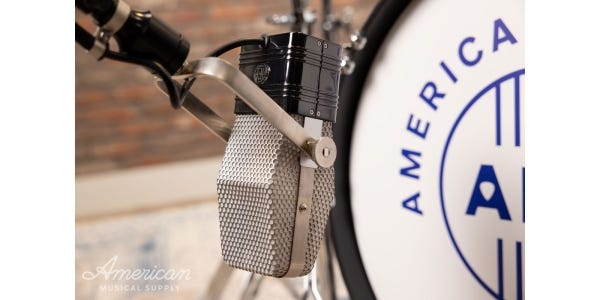
Cloud Microphones 44-A Active Ribbon Microphone
Special Price $1,499.00


Multiple Patterns and Phase
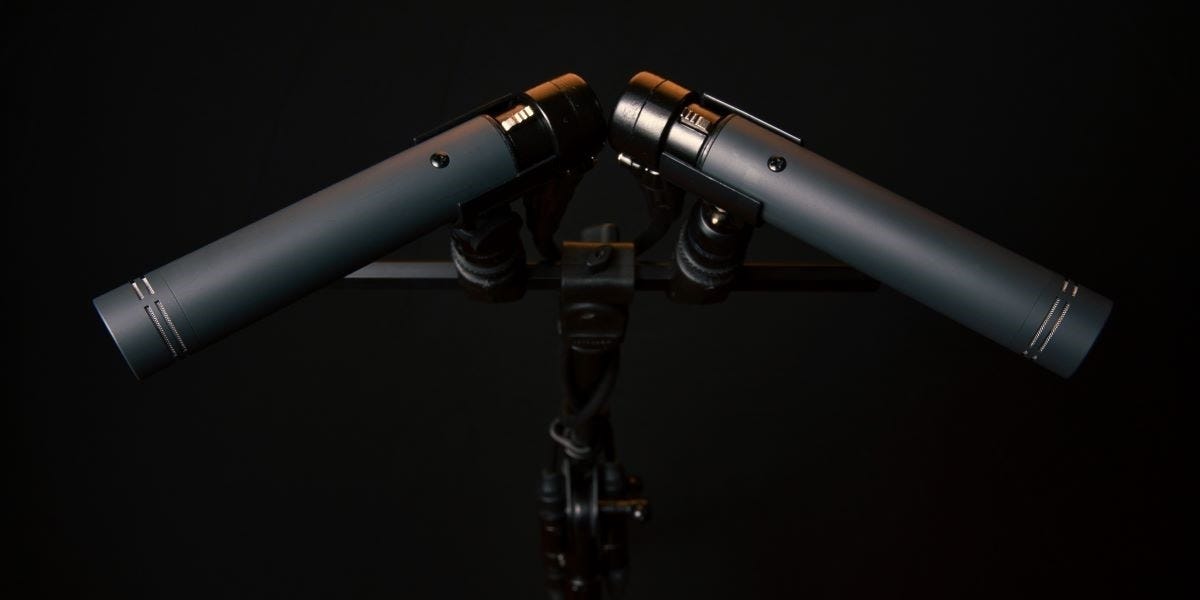
Now that we know a little more about the basic polar patterns, let’s look at how they interact with each other when used in combinations. Sound waves travel in time, and the point in time can be referred to as the phase. If you placed two omnidirectional microphones aimed towards each other in a “V” formation (45 degrees) the area where the patterns overlap will be “phase canceled” this creates a nice stereo separation for overhead drums, piano or any stereo source.
Microphones are basically musical paint brushes; there’s no rule against thinking outside the box and using dissimilar patterns together. Try using a figure eight placed sideways with an omni in the middle aimed at the 12th fret of an acoustic guitar.
A popular choice for stereo room mic’ing is the “Blumlein technique.” Place one figure eight mic upside down over another with the axis rotated 90 degrees. Now make sure the pair is 45 degrees off axis of the sound source. The four resulting patterns will capture the sound stage and the source in beautiful three-dimensional detail.
Modeling Polar Patterns
With all the subtle and not-so-subtle effects that microphone polar patterns can have on a recorded track, wouldn’t be nice to be able to choose which polar pattern to use after you made the take?
Using digital technology, several manufacturers offer microphones that use modelling algorithms to simulate any polar pattern after recording the track. Again with the paint brush theme, this allows the user to totally trample the rules of what goes where and try out some truly outrageous combinations while keeping a “safe” copy of the original recorded performance. These were originally focused on recording applications, but live applications are now available, and the field is growing.

Slate Digital ML-1A Large Diaphram Modeling Microphone
Special Price $399.99
Universal Audio Sphere DLX Modeling Microphone
Special Price $1,499.00

3 Popular “Buy-Polar” Purchasing Patterns
Microphone polar patterns can make a huge difference in your recording or live sound application, and it’s important to get the right one for your desired sound. And if you fall into one of these three “Buy-Polar” Purchasing Patterns, here’s some quick advice:
- “I’m waiting for the price to go down” Don’t: It’s probably going to go up.
- “I’m waiting for cooler version” Don’t: There probably someday will be, but you could wait forever instead of making music now. Abbey Road was recorded on a 4-track in1970.
- “I don’t have that kind of money” Don’t: Use our easy payment plans spread out payments with 0% interest!
If you still have questions about which microphone polar pattern would work best for your needs, our team is standing by to help you find the all the solutions for your musical life. Whether you’re burning the midnight oil in your studio, strumming on your sofa or packing the subwoofers back out to the van, we have answers. Our Gear Acquisition Specialist hotline is 800-458-4075.

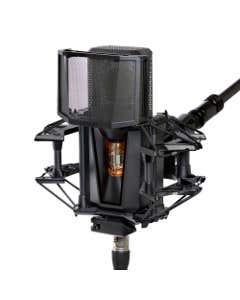
Lauten Audio Atlantis FC-387 Large Diaphragm MultiVoice Condenser Mic
Special Price $1,758.00-
Universal Audio Sphere DLX Modeling Microphone
Special Price $1,499.00 

Universal Audio Bock 187 FET Condenser Microphone
Special Price $1,249.00
Lauten Audio Clarion FC-357 FET Large Diaphragm Condenser Microphone
Special Price $1,278.00
Universal Audio Bock 251 Tube Condenser Mic with Power Supply
Special Price $5,999.00
Lauten Audio EDEN LT-386 Large Diaphragm Tube Condenser Microphone
Special Price $3,898.00