
Ever go into a music store and see the grand display of guitars on the wall? I remember even as a kid identifying each guitar model with specific guitar heroes that played them. When I see a Les Paul I think of Slash or Jimmy Page. And when I see a Fender Telecaster I think of Danny Gatton or Roy Buchanan. The players who played them were the ones who set the trend and direction of what situations these guitars could be used in.
It always made sense that each guitar had a certain personality or characteristic that was associated with it. It’s no surprise that each genre stands for something different than the other. Rock being more about breaking rules and tradition, while country might be more confident in keeping that tradition. Whatever genre it is, we can see there are consistent guitar choices by the folks who play them, and we’re going to dive into what guitars are preferred for each style and genre.
*Disclaimer - You can play any genre with any guitar. So before you blow up the comments, just remember that these are our suggestions as mere mortals. In the end, pick the guitar that sounds and feels best for you! And now that that's out of the way, let's find out which guitars are best for which genres!
Rock – Gibson Les Paul
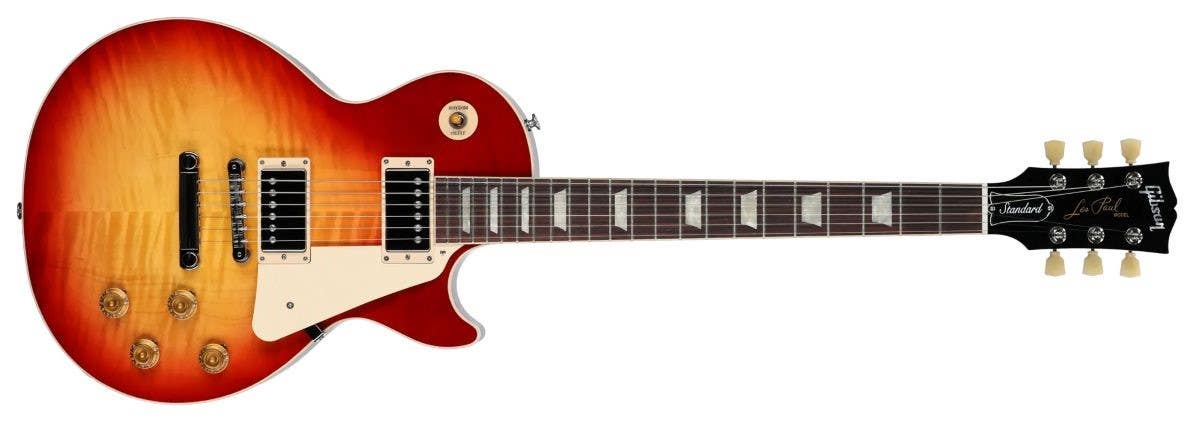
When I hear rock music, I immediately think of overdriven guitars, bluesy feel, and lots of rebellion. We’ve heard and seen different rock bands over the course of the years and they all choose different guitars to fit their styles. But we can all agree that the Gibson Les Paul has been the most popular and widely known guitar for those who want to rock.
Funny enough Les Paul (the person) played jazz. But when he developed the Les Paul and teamed up with Gibson, it became a huge hit for rock guitarists. Jimmy Page, Slash, Joe Perry, Alex Lifesson, Billy Gibbons, Peter Frampton, Al Di Meola, and many more have been legendary figures who have wielded Les Paul guitars throughout their careers.
So the question is, why is a Les Paul great for rock music?
The Les Paul is really an ideal guitar for many genres because it has a full, thick, and beefy tone with lots of dimension provided by the smooth high-mid sizzle. You can really get a rich and powerful sustain from an axe like this because of the humbucker pickups, which really made it a staple on stages and in studios worldwide.
If you listened to really any hit record from a 70s rock station, chances are it’s recorded with a Les Paul. There’s just something about a Les Paul plugged into a cranked Marshall just screams “Rock n Roll”.
For a more budget-friendly rock option, check out the Epiphone Les Paul. It’s the same great model as the Gibson version, but with a much lower price tag.
Honorable mentions:
- Gibson SG
- Epiphone SG
- Fender Stratocaster
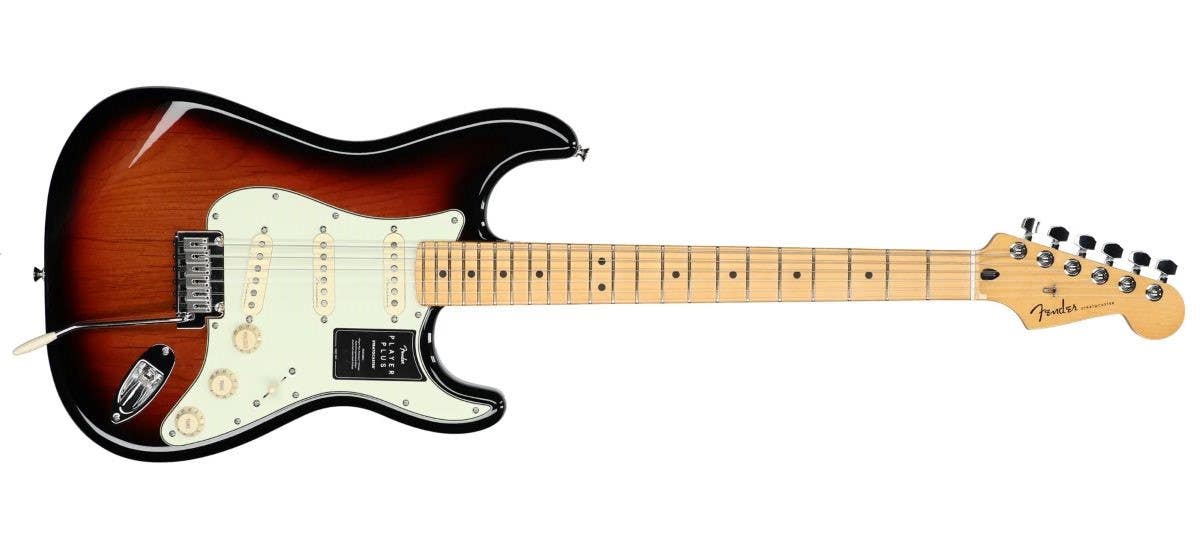
Blues – Fender Stratocaster
Here we come to one of the genres that gave birth to so many of the modern genres that we listen to today. The BLUES!
The blues is timeless and will remain as one of the staples of American culture. Throughout the years, many blues guitarists have relied on the same couple of guitars to accompany them from the saloons and pubs to large auditoriums and concert halls.
The Fender Stratocaster has been at the forefront of blues guitarists’ tool bag. When I think of legends who used Stratocasters, names like Eric Clapton, Jeff Beck, Buddy Guy, Stevie Ray Vaughan, Jimi Hendrix, Mark Knopfler, David Gilmour come straight to mind — and the list goes on!
What is it about the Stratocaster that catered to so many guitarists in the blues realm? Well, the Strat has such a unique tone that it can easily be distinguished from other guitars. How? It’s all in the wood and pickups. From a slick quack to gulpy chime sound, there isn’t another guitar that can duplicate what it does best (although the latest PRS Silver Sky comes close!).
With most Strats, the single coil pickups and the 5-way pickup switch are the driving force behind that lovely chimey tone. Something about listening to Stevie Ray Vaughan rip on “Mary Had a Little Lamb” just made me want to run out and buy a Strat. And what about the soaring lead on “Led Boots” by Jeff Beck!?
The guitar sounds on these kinds of songs are brought to you by none other than the Fender Stratocaster. Its characteristic tone can be picked off any record without even needing to see any images of the musician playing them.
Some of the most successful records have been recorded with a Stratocaster, and it’s no doubt why this was the choice of axe that fell into our favorite six-string slingers.
Now if you’re beginning to dive into the world of Stratocaster-mania and you’re not looking to go super high with the price range, we recommend checking out the Fender Player Plus line or even the Vintera line. Both price points are within an affordable range while still blowing quality out of the park. You’re surely getting a value that is above what you’re paying for…honestly!
But if you want to explore some other brands, check out the PRS SE Silver Sky or a Charvel Pro-Mod So-Cal Style 1 HH FR as alternatives. You can still get that Stratty, clean, and quacky chime that you get in a Stratocaster.
Honorable mentions:
Country – Fender Telecaster
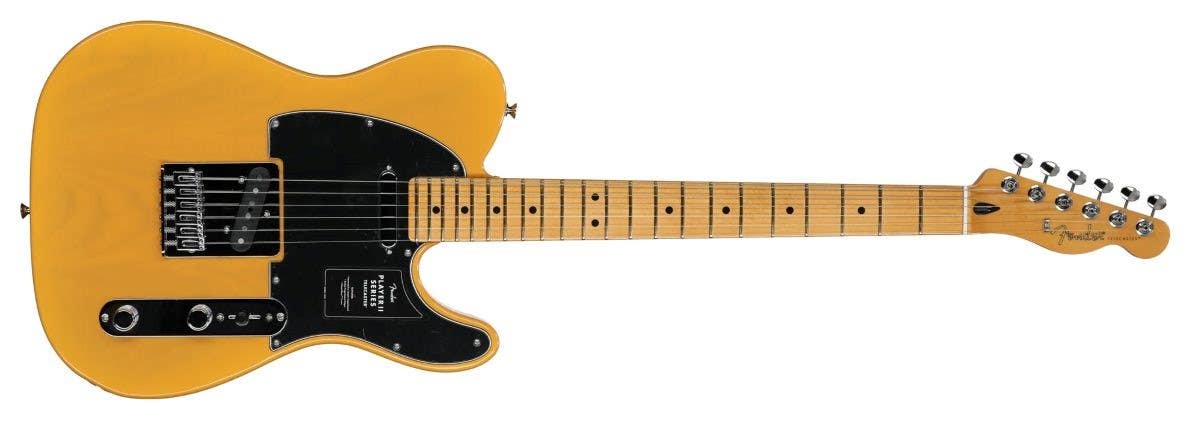
Country guitarists have consistently stuck with guitars similar to the ones blues guitarists pick out. There’s definitely an overlap with the use of Stratocasters and Les Pauls, especially nowadays. However, there is one guitar that’s quintessentially “country,” and that’s the Fender Telecaster.
The Fender Telecaster has been the country guitar player’s choice for basically forever. Ever hear the twangy chicken-pickin’ on country records from Roy Buchanan, Brent Mason or Brad Paisley, even Danny Gatton? That’s all the Tele.
Initially given the name the “Broadcaster”, after a legal dispute, Fender changed its name to the Telecaster, which has been a success since the ‘50s. The Telecaster utilizes single coil pickups that give it that twang or chime. It’s similar but still very different to the Stratocaster.
Okay so how can it be similar but different? The Stratocaster and Telecaster both cut through any mix with sleek and crystallized highs. And the lows are clear and defined which makes it the ultimate weapon for country musicians. That’s how they’re similar.
Where they’re different is that the tone of the Tele is unmistakably more “twangy” than the cool chime of the Strat. Country loves twang, and that’s why country artists love the Telecaster.
Aside from a different tone, the Telecaster is also easier to play. Its shape allows your fingers to effortlessly move up and down the fretboard, and bending is a breeze.
Side note: Telecasters are great substitutes for pedal steel guitars because of their tone and how easy it is to bend strings.
Honorable Mentions:
- Charvel So-Cal Style 2
- Really anything from Gretsch, especially the G5230T Electromatic Jet
Singer/songwriter – Acoustic guitar

Singer/songwriters prefer acoustic guitars. They’re great for busking the streets and playing coffee shops. You know, when you don’t feel like carrying around a bunch of gear. There’s also just something about the acoustic guitar that feels more soulful and authentic — or is that just me…?
Over the years, many singer songwriters have evolved with their choices in acoustic instruments. Taylor Swift plays Taylor guitars, Johnny Cash and Willie Nelson played Martin guitars, and others swear by Gibson or Takamine.
The “best” acoustic guitar for singer/songwriters is the one that fits your style. Taylors tend to have more highs, while Martins are big and boomy with lots of bass. And since the tone all comes from the wood, every acoustic guitar sounds different. Make sure to try out a few to find the one that best fits your sound.
One thing to note is that acoustic guitars come in a ton of different shapes and sizes, so the body of the guitar is going to matter a lot. It’s not as big of a deal in the electric guitar world.
The body and soundboard where the sound is projected has an effect on the instrument’s overall tonal balance. Guitars that are wider at the waist will bring about a lower-mid frequency response and bodies that are wider at the shoulder and maybe a bit narrower at the waist will project brighter tones.
The body shape and size will also impact playability. A massive Dreadnought or Jumbo body might not feel comfortable for smaller players, where a 00 or parlor guitar might be perfect.
Also, it’s worth mentioning that acoustic guitars are harder on the fingers than electric guitars. They use larger-gauge strings and typically have higher actions. Yes, it will hurt your fingers until you get used to it. Sorry… Look for a guitar with a lower action for easier fretting.
So, let’s get to it: What kind of acoustic guitar is right for your singer/songwriter style? It’s good to break it down into what kind of places you’re looking to play your guitar. If you’re a beginner or intermediate player and want to bring your guitar around to friends and family, jam sessions, and maybe a gig or two without blowing your budget, try a Yamaha Acoustic like the FG280, Epiphone acoustic like the Hummingbird or J-45, or a Taylor 100 Series. These are great guitars that offer a nice and well-balanced sound which will be perfect for any environment.
And if you want to go all-out on your singer/songwriter acoustic guitar purchase, you absolutely can’t go wrong with any of these legendary guitars:
- Martin D-28 (my personal favorite)
- Taylor 800 Series
- Gibson J-45
- Gibson Hummingbird
These are just some suggestions out of the many acoustic guitars that you’ll see along the way. Dreadnought and Jumbo model acoustics will give lots of body to the sound, allowing the low frequencies to really project. I particularly prefer these, especially if I’m going to be in areas where I don’t have a microphone helping me project the sound.
Parlor guitars like the Martin 000-18 and travel guitars like the Baby Taylor and Little Martin are great for carrying around and playing in intimate places like small rooms and cafes. You can also find innovative guitars designed for playability like Takamine or the Martin SC series.
There are so many different acoustic guitars out there that I could go on forever. The best way to find the right one for you is to try them out!
Metal – Ibanez RG
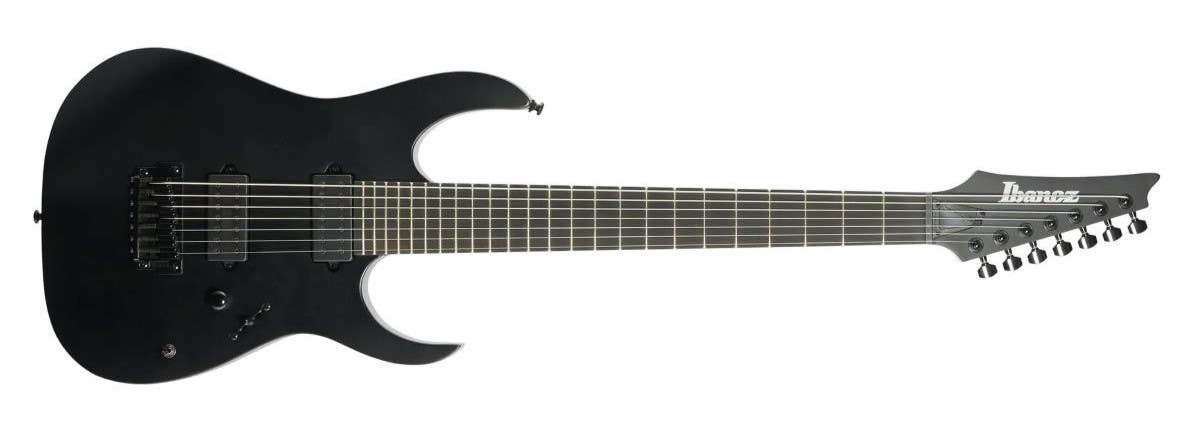
For our heavy metal peeps, this one’s for you. I think most people assume that if the instrument has gothic colors, then it’s perfect for metal, but it does go a little deeper than that.
Guitars that serve metal have high-output humbuckers (which sometimes are active) to create a tight and punchy tone when driven with distortion and overdrive.
Metal guitars also typically have tremolo bridges for pitch bends and epic squeals — most notably the Floyd Rose with its locking strings. You can use a tremolo bar to help you do cool dive bombs or add some extra dimension to ringing notes.
When it comes to shredding and heavy metal chugging, you can’t go wrong with the Ibanez RG. It’s the quintessential “metal” guitar with its intense looks, powerful pickups, and lightning-fast neck. In fact, you could walk blindfolded through the Ibanez warehouse and pick out any guitar, and it’ll be perfect for metal. That’s why Ibanez the go-to for artists like Steve Vai, Joe Satriani, and Nita Strauss. They're masters of metal!
Of course, you can really use any guitar for metal if you have the right amp and distortion pedals. Randy Rhoads and Kirk Hammett both used Gibson Les Pauls, and Yngwie Malmsteen even used a single-coil Fender Stratocaster!
Honorable mentions:
Jazz – Gibson ES-335
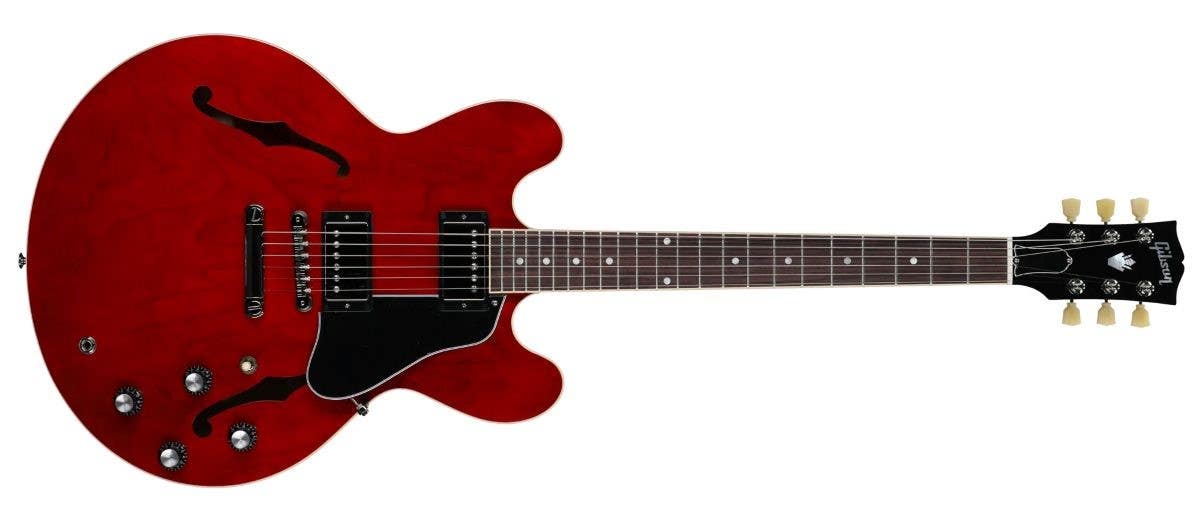
Ya like jazz? We do indeed! Jazz is one of America’s oldest art forms and one of the longest-standing genres, so you can imagine how many different guitars have contributed to its ever-evolving sound.
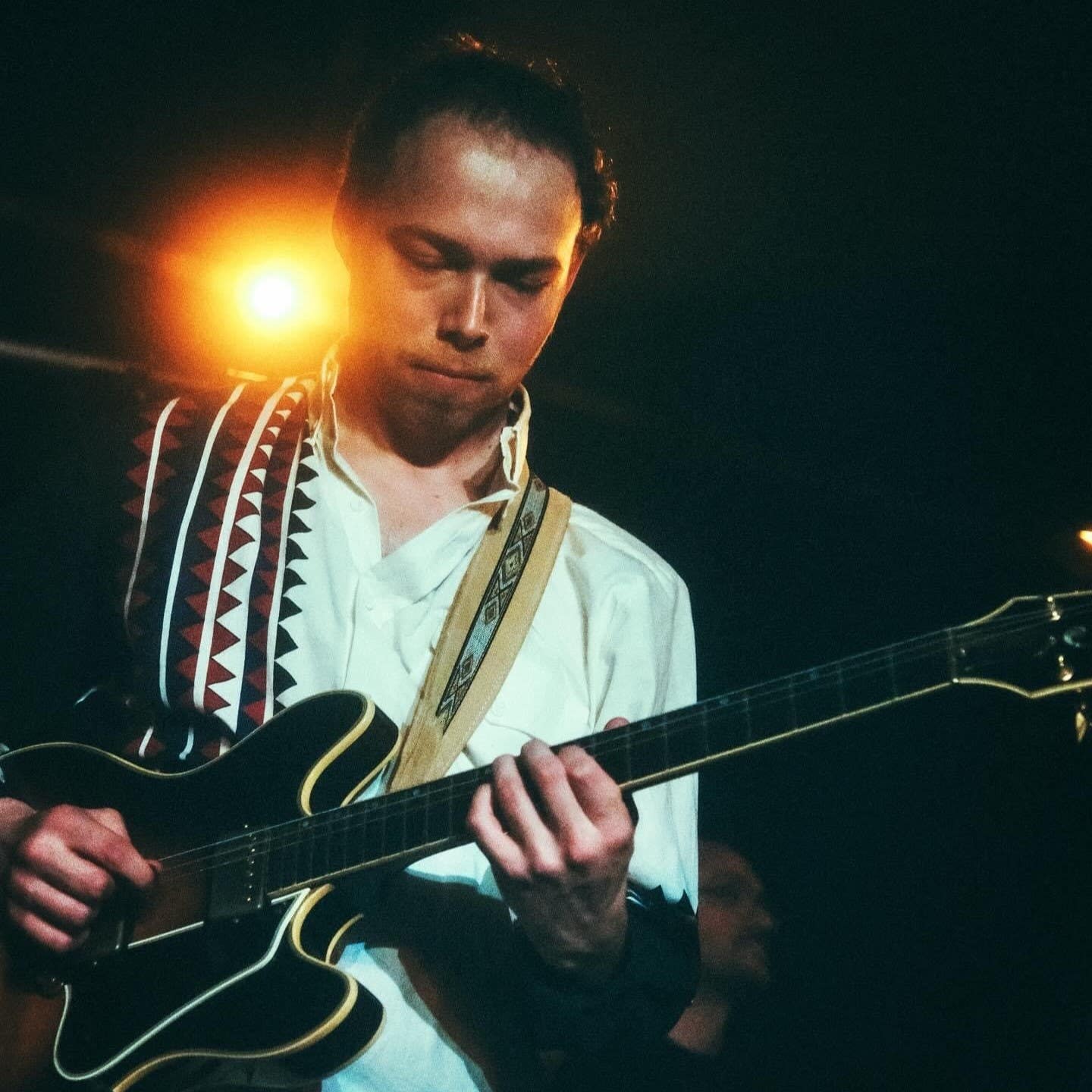
While many of the traditional jazz guitarists leaned towards the hollow body guitars like the Gibson ES-175 as their primary choice, modern jazz players want something a bit more versatile, like a good old semi-hollow guitar.
Semi-hollows, like the Gibson ES-335, can cover jazz and also extend into blues and jazz-fusion as well. They’re still mostly hollow for that sparkly clean jazz sound, but the center block reduces feedback, giving you the ability to wander into overdrive territory without consequence. They’re really masters of versatility!
Lots of players who used hollow body guitars like the ES-175 have moved to the 335 at some point. Artists like Larry Carlton, Grant Green, John Scofield, BB King, Steve Howe, and Lee Ritenour, have all used the ES-335 to cover various tones.
So, what kind of sound can you get out of a 335? There’s a mellow and lower resonance from the hollowness but also get a cutting, fresh and even bit of a metallic sound from the center block and the thinness of the guitar, which is more reminiscent of the solid body guitars.
Okay, Gibson ES-335s can be pricey. Are there any great jazz alternatives? You know there are!
For starters, whether you’re touring clubs, playing small bars or even just sticking to the bedroom and small jam sessions, an Epiphone Sheraton is a great choice. This guitar is great for covering all levels; from beginner, intermediate, to even professional guitarists. For the quality and price, it’s got me thinking of snagging one for myself…
Another great jazz guitar that won’t break the bank but still maintains the high-quality standard is the Ibanez John Scofield JSM20. With a jazz legend sticking his name on it to back it up, you know it’s got the seal of approval. Ibanez is considered as one of the top guitar brands today and stands alongside some of best in the game. Also check out the Ibanez Artcore series for tons of affordable jazz-ready guitars.
Honorable mentions:
Progressive metal – Strandberg Boden
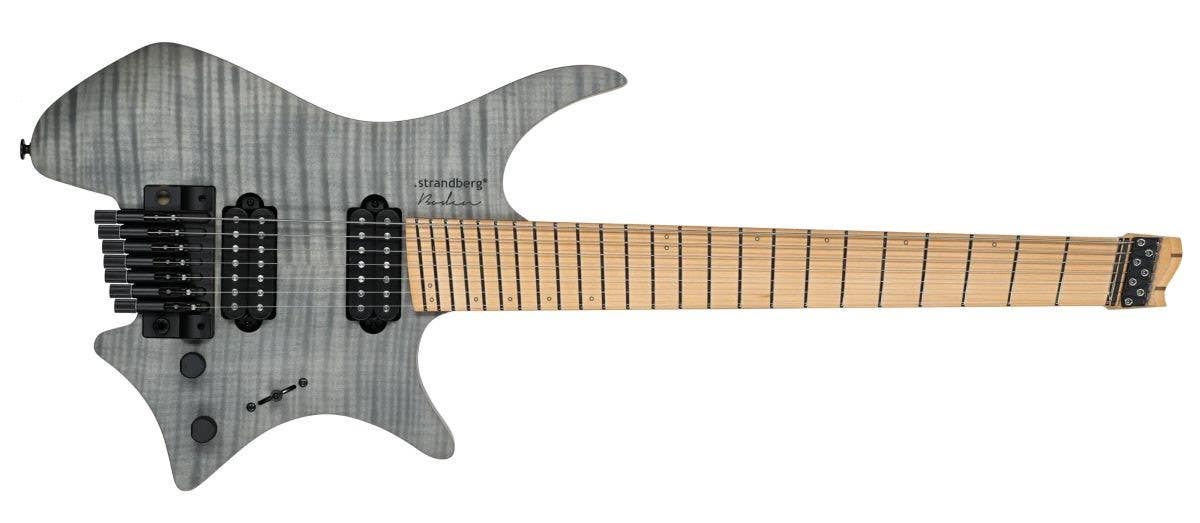
What happens when you’re “too good” at guitar to fit into any other style? You become a prog artist!
Progressive metal is where the virtuosos live. You know, the ones who make you want to quit guitar forever… They shred and play super complicated and intricate pieces that seemingly come from outer space. Think of guitarists like Tosin Abasi, Tim Henson, and John Petrucci.
Prog is also a melting pot of genres — think Fusion but with more distortion. There are elements of metal, jazz, blues, rock, and even classical. And blending all those styles means you need a guitar that can handle such versatile and intricate work.
The Strandberg Boden stands out among the progressive metal guitars. It’s built entirely for playability and versatility. With genre-bending pickups, multi-scale necks, and headless design, it’s really the ultimate prog-metal shredder.
Of course, progressive metal is very technical, so it’s more important to choose a guitar that you feel most comfortable with. If that happens to be a classic Gibson Les Paul (like David Gilmour, Alex Lifeson, or Tool’s Adam Jones), then by all means, go for it!
Honorable mentions:
Fusion – PRS DGT
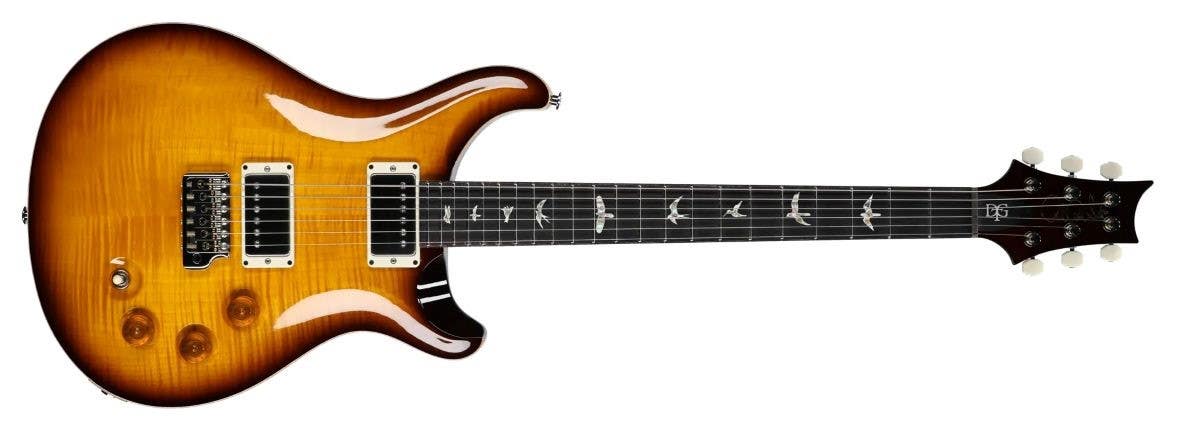
Fusion is a genre where we combine elements of rock, jazz, blues, funk, R&B/soul, and even some heavy rock. When anyone’s in a melting pot of different styles, you want an axe that can blend them all effortlessly and seamlessly.
What are some great guitarists who play fusion and what kind of guitars do they use? Al Di Meola uses a Gibson Custom Shop Les Paul Custom, Greg Howe uses a Kiesel GH24 (reminiscent of a Stratocaster), Oz Noy uses a Fender Stratocaster, Mike Stern uses a Yamaha Pacifica (in the style of a Fender Telecaster).
As you can tell, some use more traditional guitars, and others have gone with newer brands and models. In our humble opinion, you can’t go wrong with the PRS DGT. It’s a collaboration between PRS and David Grissom that provides jazzy cleans and bluesy crunch that’s perfect for any Fusion set.
Of course, you can really go with any guitar that you want, as long as it sounds good. Most fusion artists gravitate toward humbuckers for their smooth, clean tones.
Honorable mentions:
Guitar style matters
Whatever genre you might be playing, the important thing to note is that the two keys to success are comfort and tone. If you find a guitar that feels comfortable and sounds the way you want to sound, that is the perfect guitar for your genre.
Take the time to try out a handful of different guitars to find the one that’s right for you. Look to the trends and artists in your space to guide you toward certain models, but the ultimate decision should be up to you and you alone. If you want to play soft jazz on an active-humbucking Ibanez shredder, then do it!
Besides, you can always get more than one… ha!
But in all seriousness, if you have any questions about guitars and choosing the best one for you, just reach out to the AMS Customer Service experts at 800-458-4076. All our customer service reps are musicians themselves, so they can answer any questions you might have.
Happy playing and best of luck with your guitar search!