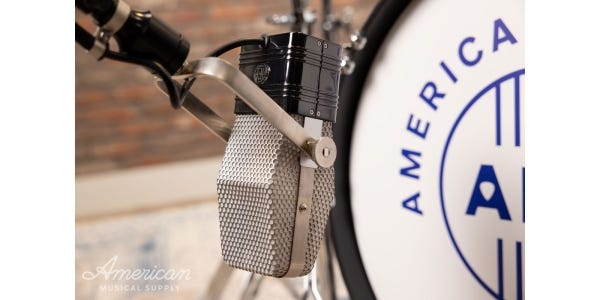
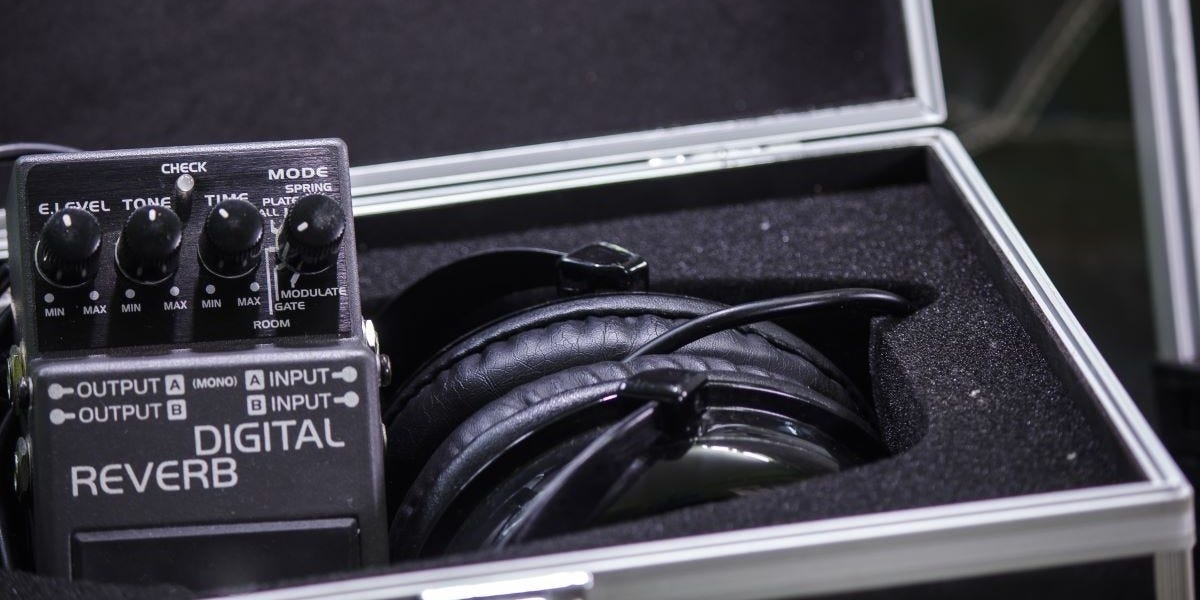
You know how it’s super cool when you yell into the Grand Canyon (or large room, smaller canyon, etc.) and it yells back? If you live under a rock, that’s called an echo. And it’s just as cool when you add it to your electric guitar or bass tone!
Echo, delay, and reverb are referred to as “time-based” effects because we use them to manipulate time and simulate space. But they can do way more than just add a little trail to the end of your signal. Here are some cool reverb and delay tips and tricks for your next jam session.
Echo, Delay, and Reverb: Explained
Echo, delay, and reverb all refer to the same phenomena occurring in natural space and time; basically, sound bouncing around. However, there are a few key differences between the terms, which apply to both physics and musical effects:
- Echo is the sound bouncing back from an object. The distance between sources (in real life) determines how long between echoes and how many times it repeats.
- Delay is the gap between sounds. It’s the sound source being “held up.”
- Reverb is an aggregate collection of waves bouncing back from room surfaces. The size of the room and makeup of the reflective materials allow us to sense the space we’re in and the nature of the materials.
In musical world, echo and delay are often used interchangeably. They give you little repeating trails that follow your signal chain. Reverb effects elongate your sound and add decaying trails.
Echo (and Delay) Canyon
From a quick doubling to fatten up a bass track to a long trailing echo to draw out a guitar solo, echo is a must-have effect in any producer’s toolbox. The effect is pretty self-explanatory: It adds an echo to your sound. Think of it like CHORD, CHOrd, Chord, chord… And you can adjust the length between “chords” and how many appear in the chain.
Nearly all modern echo and delay effects are based on the original Echoplex tape-delay unit from 1959. While the Echoplex created incredible delay sounds, it was also super high maintenance. And as time went on, brands started to manufacture more modern devices in both analog and digital realms that sound (almost) as good won’t make you look around for splicing tape whenever you want to add a delay to your sound.
Different echo and delay effects use different parameters to adjust their sound, but there are usually four “essentials” used by all delay effects:
- Time – How long until the repeat happens. This is also commonly referred to as “rate”.
- Feedback – How many repeats will be played. This is sometimes referred to as “regen”.
- Mix – How much of the effect signal is mixed into the original signal.
- Level – This determines the overall output of the mix of dry (regular instrument) and wet (delayed) signals.
The tempo or Beats Per Minute (BPM) of a track is central to the timing of echo and delay effects. You want your delay to sync with the song!
Delay and reverb times are measured in milliseconds, but BPM is (obviously) measured in minutes. If you divide 60,000 by the BPM, you can calculate the beats per millisecond to make it easier to dial in your delay.
For example, if your song has 120 BPM, the equation would look a little something like this:
60,000 / 120 = 500
Set your delay to 500ms, and you’ll get little echoes on the quarter notes. Jump down to 250ms to regen on eighth notes, extend to 1,000 go to half notes, and so on. Play with the lengths to see what works best for your project.
There are also some helpful delay calculators online that can simplify things — especially when trying to figure out dotted delay times. Who needs to do that math…?
Fun Tricks to Try with Delay
Delay is cool by itself, but there are plenty of ways you can play around with a good echo to make it even more musical and unique.
Once you get your delay in sync with your BPM, try dividing it in half and running that in the left channel only, keeping the original delay in the right channel only. It has the effect of “lifting” the track in mix without just making it louder.
Reverse Echo is another fun musical use for delay that plays the sample backwards. Think hints of Hendrix. On my pedalboard, I run two identical delays set to exact same time, both running in reverse. This allows the main signal to remain forward and the trails to be in reverse. It works great on vocals too!
Reverberant Fields Forever
As mentioned above, reverb is used to simulate space. There are five types of reverb, and they’re all useful for different applications:
- Hall – modeled after a larger space like a concert hall with super-long decays that can sometimes wash out the signal.
- Chamber – similar to Hall but with a little extra clarity.
- Room – based on a smaller space and gives a very natural decay, more like what you’d hear in real life.
- Spring – a short-decay reverb that offers a bright, clean, vintage sound. You’ll often find spring reverbs built into amps (especially tube amps) Fun fact: It’s the first artificial reverb that’s not based on a real space!
- Plate – similar to a spring reverb with a denser and warmer sound. Think Beatles and Pink Floyd.
Play around with the different types of reverb and find the one that works best for your sound! There are plenty of effects pedals that offer multiple types of reverb with the flip of a switch!
Fun with Reverb
Again, reverb is amazing on its own, but musicians always find fun, creative ways to get even more out of their effects.
Here’s a cool hack using a reverb of any type: Use input channels for the reverb return (the “wet”), pan the channels hard left/right, and put both channels out of phase. This makes the reverb float forward in the mix without being louder. Try playing around with the pan controls to “widen” the track in the mix.
Since reverb is essentially simulating a room, try to avoid presenting more than one simulation at a time, like using both a hall and plate reverb at the same time. It’s sonically confusing for the listener.
Careful With That Effect, Eugene
Delay and reverb are awesome, but they’re also some of the most overused effects in the musical world. They can quickly hurt clarity if you add too much — especially for vocals and more intricate instrumental work. The more reverb and delay you add, the harder it is to understand the words — which is fine if you’re Michael Stipe, but maybe not for others…
If you’re adding reverb or delay in the studio, keep in mind that you will have listened to the tracks hundreds of times by the time the project is ready to be published; the intelligibility of the vocals will be much less apparent to a new listener.
A clever production technique is using input channels to run the delay returns. This gives you the opportunity to equalize the time-based effects differently and also use other effects. Your ears perceive the faster waves (mids and highs) more than lows, and that’s where a lot of the “mud” builds up. It cleans up the mix a lot if you can thin out the lows on the delay and reverb.
Trailing off with Delay and Reverb Effects…
It doesn’t matter if you’re a guitarist, vocalist, keyboardist, producer, audio engineer, or even a drummer — EVERYONE uses delay and reverb at some point. But it’s important to use the right delay and/or reverb for your sound and project.
At American Musical Supply, we understand how important your music is, and we want to help you succeed. We have an insane selection of delays and reverbs, both physical and digital. If you want to speak “without delay” with one of our gear experts, call us a call at 800-458-4075. Don’t forget about our easy no interest financing and VERY fast and free shipping from our four fulfillment centers in the US.
Not buying a great reverb or delay now is like time-traveling into the future and stealing your own happiness…