
Many players believe the tone of a guitar or bass is created by how much of the energy in the headstock and neck can be transferred into the body. With that idea in mind, the method of joining a guitar’s neck to the body can have a big effect on the nature and tone of the instrument. Let’s take a closer look at the bolt-on vs. set neck guitars, and why it matters.
What Is a Set Neck Guitar?

Ever since mankind has been building things out of wood, the method of joining two pieces of wood has been a key concern.
Mortise and tenon joints (where one piece of wood fits snugly into the pocket of another) date back at least 7,000 years and are traditionally the choice for joining the body and neck of a stringed instrument.
A set neck design involves the same idea of a pocket holding the neck. But it’s not just left to the snugness of the joint; set neck guitars have the neck permanently glued into the body. You know, “set.”
Pros
- Enhanced low end: the glued neck joint tends to drive vibrations to the body more efficiently, producing better bass response.
- Smooth transition from neck to body: Set neck guitars can have lower profile joints, allowing your hands to move more seamlessly past the joint to the upper frets, more comfortable in the solo zone.
- Lighter weight: Metal is heavy, and no screws means saved weight — at least a couple ounces…
Cons
- Setup: Fixed neck angle limits setup options and adjustability. It’s called “set” for a reason!
- Repairs: If you break your guitar’s neck, replacement options are unfathomably expensive.
- Price: The joint has to be cut absolutely perfectly. Plus, glue needs time to dry. Time + Labor = More Cost.
- Fragility: Set neck instruments are more fragile than bolt on instruments.
What Is a Bolt-On Neck?
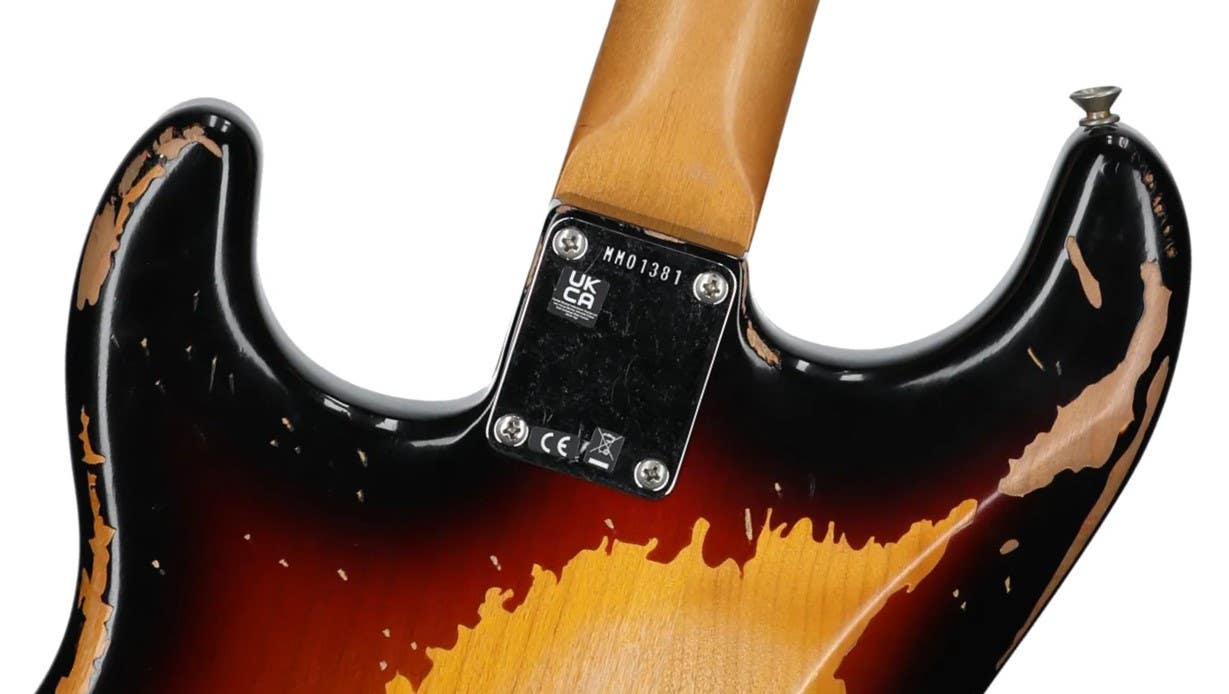
The screw is a more recent invention, which came around in the form of a water pump back in sunny 990CE. Metal screws came around in 1760 but only found their way into guitar production in the mid-1900’s.
A bolt-on neck uses mechanical devices (screws) to hold the neck in a pre-shaped pocket. Basically instead of gluing the neck in, you just run some screws through the back of the body into the neck joint to attach the neck to the body.
Pros
- Price: Usually, bolt-on neck guitars will be less expensive than set neck guitars of the same level.
- Brighter tone: Bolt-on necks tend to not emphasize bass, resulting in a brighter tone.
- Setup flexibility: A bolt-on neck can be adjusted to achieve a slightly different neck angle if needed for a perfect set up. Just unbolt the neck, add shims as needed, and bolt it back on.
- Repairs: If a neck is damaged or hopelessly unworkable, it can be easily replaced.
Cons
- Less low end: (Also listed a pro) The design does not drive the body as hard as a set neck, mostly noticeable in less bass response.
- Less sustain: Bolt on design tends to limit sustain compared to a set neck design.
- Bigger heel: You have to have a decent amount of “chunk” in the body for the bolts to hold. The neck transition on bolt-on neck guitars is more prominent than set necks, meaning soloing way up on the high frets might be a bit uncomfortable getting over the heel.
- Added weight: The necessary hardware adds to the overall weight of the instrument.
What Is a Neck-Through Guitar?
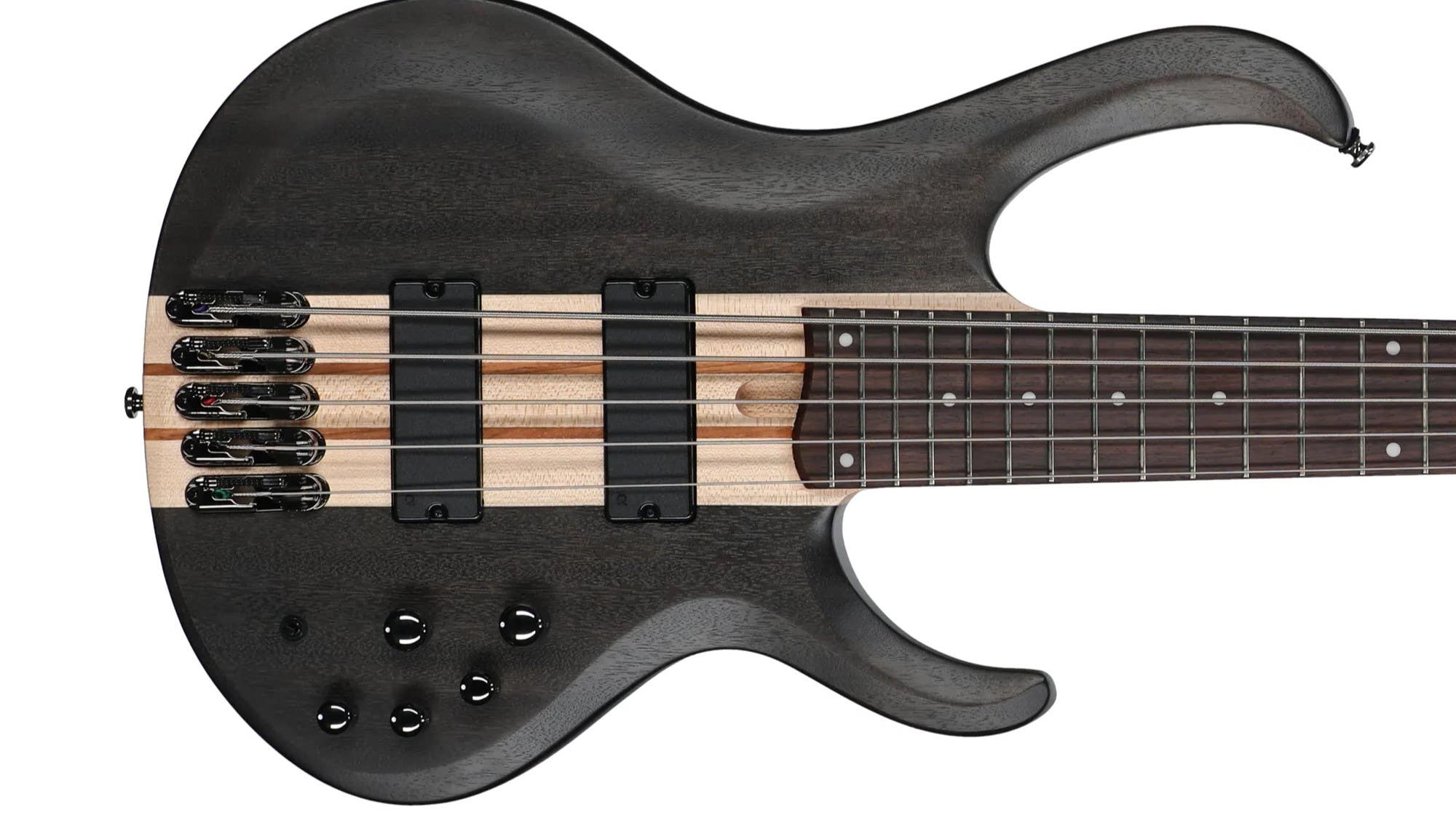
A neck-through design involves one piece of wood (often laminated for stability) running the entire length of the guitar, all the way to the strap button. Think Gibson Firebird or Thunderbird.
If a bolt-on design transmits less energy to the body than a glued joint, it would stand to reason that a solid piece of wood would transmit the most energy, as it is one with the body.
But it presents some unique challenges to the builder: Wood is inherently unstable, and a longer piece of wood is less stable than a shorter piece of wood, so any twisting or warping would be much more noticeable (and unrepairable) in a neck-through instrument.
Pros
- Sustain: The most efficient transfer of energy makes the instrument have incredible sustain
- Huge Lows: Even more efficient transfer allows even better bass response.
- Ergonomics: No neck heel at all makes the transition from the neck to the body completely seamless.
- Aesthetics: Let’s face it- they look cool as heck.
Cons
- Adjustability: Like set necks, there is no possible way to adjust the neck angle.
- Cost: Considering we are looking for a straight piece of hard wood about 5 feet long to start with, cost will always be higher.
- Fragility: Also, like set necks, neck through guitars do not endure falling gracefully.
Which Is Better: Bolt-On vs. Set Neck
As with most things in the musical world, it’s hard to really break this down to a good, better, best categorization. One of the main benefits of a bolt-on neck is it’s practically indestructible. If you play in a stage diving, crowd surfing, mosh environment, that could be a standout feature. Plus, if you break it, it’s an easy replacement.
Set neck instruments, while more fragile, generally feel more solid — at least to me. If you spend a lot of time in the upper register, you would appreciate the lack of a heel digging into your hand as you reach the 16th fret.
While often a budget-driven decision, there is enough of a tonal difference that Paul Reed Smith makes some models in both set neck and bolt-on. And if anyone can tell the difference between a bolt-on vs. set neck, it’s PRS himself!
Popular Bolt-On and Set-Neck Guitars

The “grandpa on the front porch” of set-neck guitars is Gibson. It’s really the only way they have ever made guitars, and they’ve paved the set-neck way for future generations. A notable disciple of Gibson’s legendary director Ted McCarty is Paul Reed Smith, who adopted the “long tenon” approach to making set neck guitars when he began his company in 1985.
Other notables in set neck construction reads like a “who’s who” of the guitar industry, Alvarez, Ibanez, ESP, Schecter, Yamaha, Guild, Gretsch, Godin, and Wylde, to name a few, all make awesome set neck designs.
I guess that makes Fender the “grandma in the next rocker over.” Their Telecaster (or Broadcaster back then) got the bolt-on neck craze started, and the Stratocaster ignited a fire that’s still burning to this day, inspiring an explosion of “super-strat” models starting in the late 70’s. Builders like Ibanez, Kramer, EVH, Jackson, Charvel, ESP, and Yamaha (could go on but space permitting) all make awesome bolt-on designs.
You might notice that some of these brands are listed twice… It’s not uncommon for manufacturers to make both bolt-on and set neck models.

Bolt-On vs. Set Neck: It’s Entirely up to You!
When you pick up a guitar for the first time, you’re reacting to a ton of small details wrapped up in a (hopefully) appealing package — very much like when you meet a new person. Sometimes it’s love at first sight, and sometimes its back on the hook, so to speak.
Writing this article was interesting as it caused me to spend some time with a bunch of my bolt-on guitars and pit them against some of my set-neck guitars. While different, every one of them had “something” to offer, enough so that I could justify getting my wallet out to buy it.
The bottom line is that in the bolt-on vs. set neck guitar debate, there’s really no clear winner. It all depends on your personal preference and playing style. The best way to find out which one works best for you? Play them!
Get one of our Gear Acquisition Syndrome counselors on our toll-free line at 800-458-4076 to answer any questions. And check out all the amazing bolt-on and set neck guitars right here at American Musical Supply.