
Does mic’ing a piano really matter? If you haven’t asked yourself this about a piano, then you’ve probably asked it about another instrument. The bottom line is that each instrument has its own unique tone that requires specific attention when it comes to capturing it with microphones. And pianos need extra specific attention. Why so? The piano has a wide frequency range.
Whether you're trying to faithfully capture a Steinway in a concert hall or make a sampled upright piano punchy for a pop mix, the approach changes everything. Learning how to mic a piano is an art, and in here we’re going to delve deeper into how to mic a piano so you can capture the best tone.
The Basic Idea Behind Mic’ing
Mic’ing a piano can seem very challenging, considering its size and extended range. So, where do you start? The sound you get depends not just on the mics you use, but also on the shape and condition the piano is in, along with the acoustics of the room. To get the best results, make sure your piano is well-maintained and in tune. That handles majority of the challenge. After that, it’s mostly about placing the mic(s) in the right spots.

Grand pianos feature a horizontal frame and string arrangement, allowing the hammers to strike the strings from below. This design produces a rich, resonant tone with greater precision and dynamic range, as the strings extend away from the keyboard. Because of their powerful sound projection, grand pianos are often preferred in concert settings.
In contrast, upright pianos have a vertical structure with strings and frame standing upright. Here, the hammers strike the strings from the side, resulting in a tone that is slightly less resonant than that of grand pianos. Their compact design makes them ideal for homes and smaller venues, offering space efficiency without compromising sound quality or sustain.
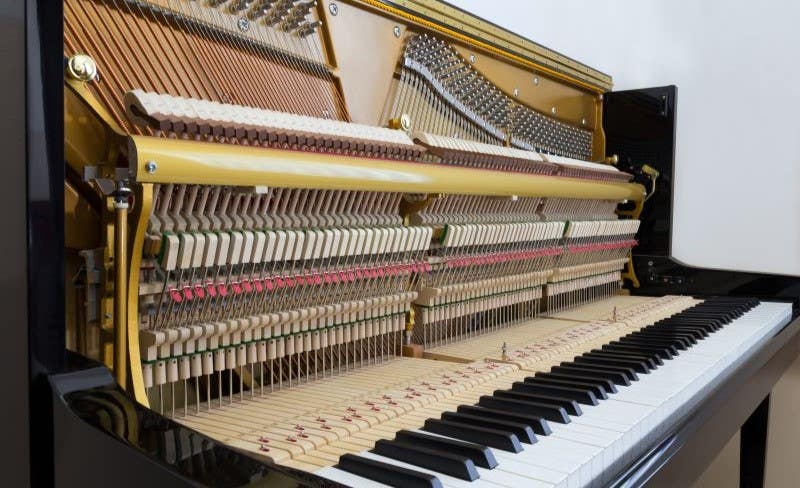
Pianos are usually recorded using a close-mic’ing setup. You’ll typically want at least two microphones to capture the stereo field and full spectrum of the instrument. One captures the higher strings and is panned to the left, while the other picks up the lower strings and goes to the right in the stereo mix, though they’re not usually panned all the way left and right. You can get by with just one mic, but you’ll probably lose some of the detail in the highs and lows of the instrument.
What kind of mics should you use to mic a piano? The piano generally has a frequency range of 27.5 – 4186 Hz, so using a dynamic mic might be limiting especially when capturing those higher frequencies. A condenser microphone will generally cover everything, but don’t shy away from using a ribbon mic too, if you have access to one. Why not even use all three!?
Mic Techniques and Placement to Mic a Piano
Now that we’ve got an idea for our basic setup, let’s dive into how we’re going to position our mics so we can capture the fullness of the piano. A key ingredient is in selecting the pickup pattern that suits your response. Omnidirectional microphones capture sound from all directions equally, Directional microphones block out sound from the sides and rear, and Figure 8 pattern, picks up sound from the front and back.
There are a few popular mic placements used by many studios to get the ideal piano tone:
- Mono Mic Placement – You can get impressive results with just a single microphone. This is usually about one-third of the distance from the hammers to the outer edge of the piano lid. Position the microphone approximately 10–12 inches above the strings, angled toward the hammers to capture a clear and focused sound.
- Stereo Pair Placement – This is a widely used technique for capturing the full tonal range of a piano, which offers a natural sense of depth and dimension. The most common approach involves two small-diaphragm omnidirectional microphones placed just beyond the hammers, directly above the strings. Space the microphones roughly 12–18 inches apart, angling them slightly toward the hammers for ideal stereo imaging.
- Spaced Pair Placement – This uses two microphones positioned several feet apart on either side of the piano. Aimed inward, this setup creates a wide stereo image, making it especially effective for grand pianos. The microphones should be elevated to a height that captures the instrument's full tonal spectrum.
- X/Y Placement – The X/Y configuration places two microphones in a coincident (crossed) pattern, with the capsules positioned as close together as possible. This technique captures a more focused and centered stereo image, making it ideal for upright pianos. Position the microphones above the pianist’s head, angled toward the hammers for maximum clarity.
Try a few different ways to mic a piano to see which one works best for the sound you’re going for. Remember, there aren’t any “rules” when it comes to music.
Best Microphones for Mic’ing a Piano
Choosing the right microphone can make a world of difference. With so many options on the market ranging from budget-friendly USB mics to professional-grade XLR models, it can be hard to know where to start. In our humble opinion, these are some of the best microphones for recording piano:
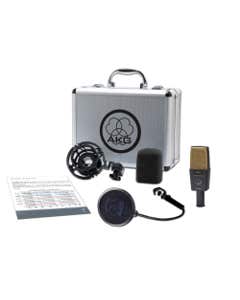
AKG C414XLII - Large-diaphragm condenser
- Highly versatile with multiple polar patterns
- Excellent sensitivity
- Detailed, bright sound. Great for capturing the full range and dynamics of a piano with clarity and presence.
Rode NT5 - Small-diaphragm condenser
- Affordable
- Compact
- Natural and clear sound, great for detailed high-frequency capture.


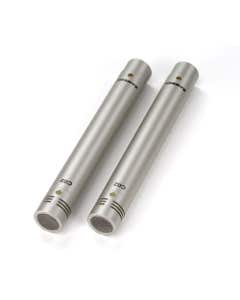
Samson C02 - Small-diaphragm condenser
- Budget-friendly
- Decent clarity but less detailed than higher-end models
- Can work well in close-mic’ing or secondary positions but may lack some refinement in tone compared to more expensive mics
Rode NT1000 - Large-diaphragm condenser
- Warm, smooth sound with low self-noise
- Wide dynamic range. Good for capturing a rich, full-bodied piano tone with warmth, useful for more mellow or classical piano sounds.
Shure KSM137 - Small-diaphragm condenser
- Rugged build
- Smooth and detailed response with a tight cardioid pattern
- Great for focused capture of piano strings with good rejection of room noise
Neumann KM 184 - Small-diaphragm condenser
- Very detailed and natural sound with excellent transient response
- Excellent for stereo pair use on piano, captures the details and articulation with transparency, often used in professional classical and jazz recordings

Sennheiser MD 441 – Super-cardioid dynamic microphone
- Excellent sound quality and feedback rejection
- Integrated pop filter
- Five position bass roll-off switch and treble boost switch
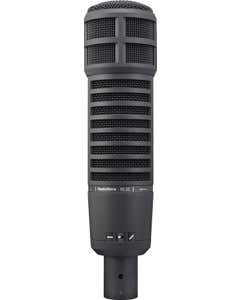
Electro-Voice RE20 – Dynamic mic
- Internal element shock mount to reduce vibration-induced noise
- Diverse in application, can pick up lower frequencies well
- Bass roll-off switch available
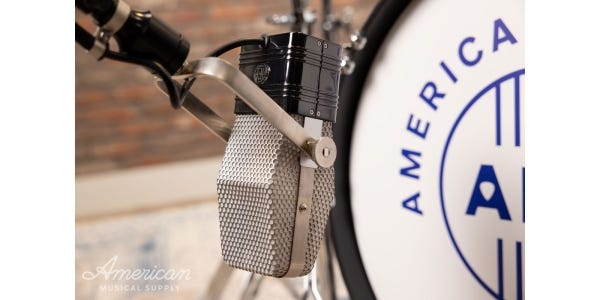
AEA R84 Classic – Ribbon mic with a bidirectional polar pattern
- Natural and articulate midrange
- Intimate performance, warm and detailed, but not harsh
- Requires 48V Phantom Power
AEA KU5A – Super-cardioid unidirectional ribbon mic
- Greater rejection of ambient noise
- Warm tonality
- Requires 48V Phantom Power
Ultimately, any microphone mentioned above is a solid choice, but it all depends on the sound you want to achieve. For classical or jazz recordings, a mic that captures a clear, natural tone will serve you best.
Ready to Mic a Piano for Yourself?
Recording piano is an art form that requires a well-trained ear for what sounds good. Developing this ear comes from experimentation trying different microphones and mic placements to achieve a balanced stereo image that captures the full range of the piano, from deep basses to rich mids and sparkling highs.
If you have questions or need some help during your search, feel free to reach out to the gear experts on our AMS Customer Service team at 800-458-4076. No matter what questions or concerns you have, you can rest assured we’ll have the answer. In the meantime, browse here at AMS for more details, models, and exclusive offers!