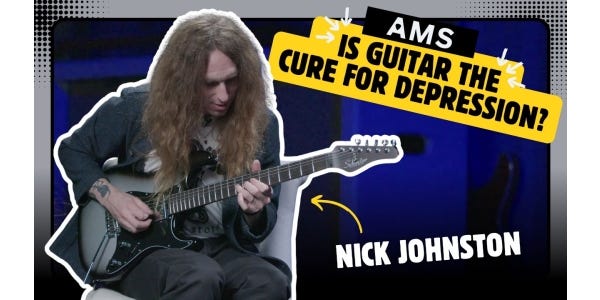

Hi there! My name is Nick, and I’m one of the writers here at American Music Supply, where I get to share my passion for gear and all things music-related through articles.
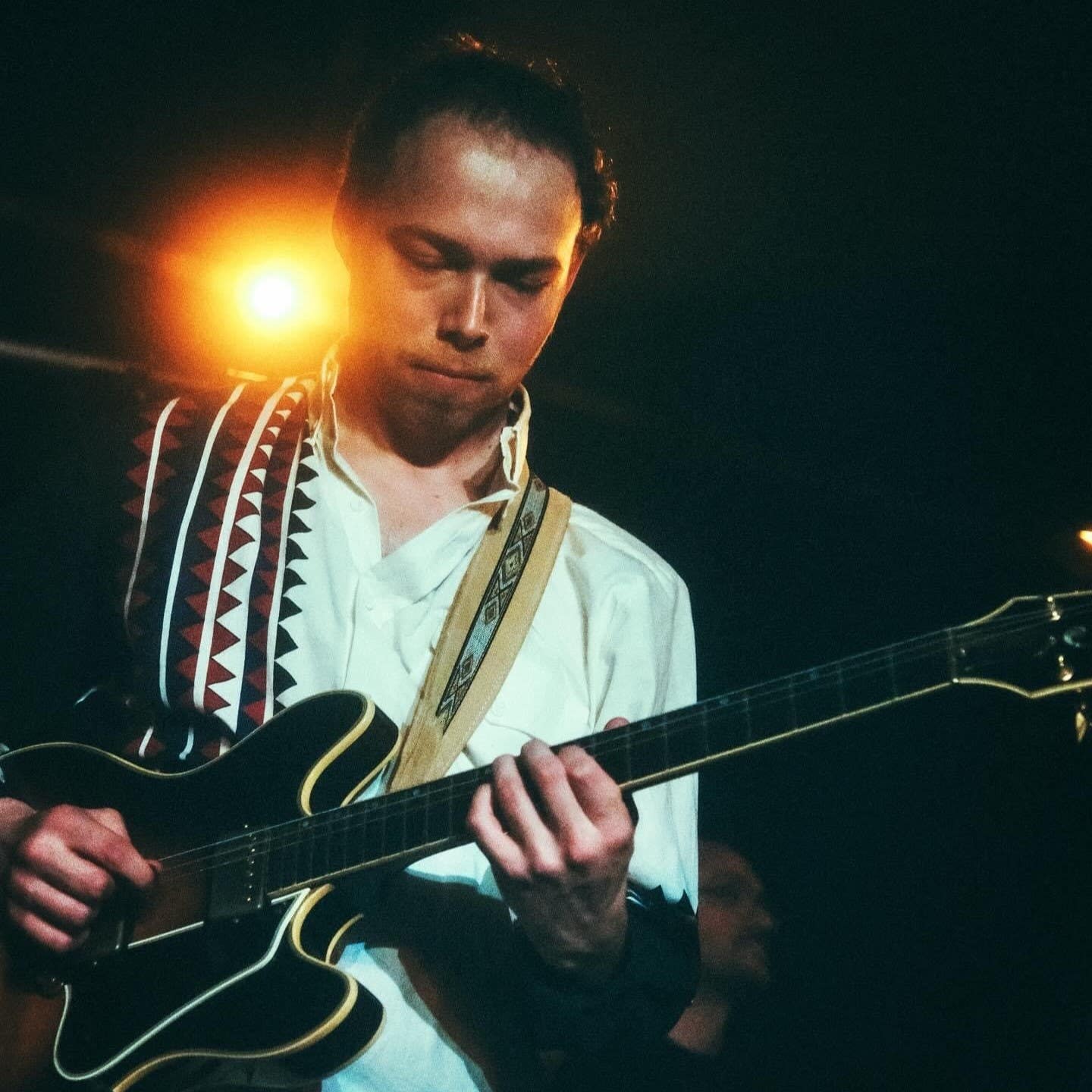
As a guitarist at heart, I spend most of my time playing with my band, Monarch, as well as jumping in with other bands that need a guitarist for their gigs. One of my favorite aspects of being a musician is working on recording sessions for artists. Whether I’m writing or improvising, it’s always a really fun experience that lets me experiment with different palettes of sounds.
My appreciation for guitar tones has been shaped by listening to a wide range of styles, from Rock, Pop, Country, and Jazz to Blues and even R&B/Soul. Each genre has introduced me to a vast library of tones, many of which I’ve studied and tried to replicate over the years. Today, we’ll dive into some of the effects I truly admire — gear that’s become a staple in my studio sessions and live gigs. Think of it as a “gear edition” of Cribs! Let’s get into it.
Fender American Ultra II Stratocaster
First up is one of my favorite and most recent axes to play: the Fender American Ultra II Strat HSS. This one for me has been used probably the most, and I’ve had it for the shortest time.


I switch between a Fender Strat and a Gibson ES Artist, which is similar to the Gibson BB King Lucille ES-355, just with active pickups. Gibson did a run of the RD Series back in the late ‘70s and early ‘80s when they introduced Moog electronics as part of the guitar’s functionality.
However, I ended up snagging the Strat earlier in the year since I really wanted a modern Strat that has all the “modern” benefits that could provide me with a lot of flexibility and reliability.
This Strat has a lot of versatility. With the Haymaker humbucker paired alongside two Ultra II Noiseless Hot Strat pickups, it offers a tonal playground that can adapt to virtually any style. Engage the S-1 switch, and you unlock an entirely new dimension of sounds by splitting the Haymaker into a single coil. It’s perfect for dialing in those more nuanced tones, which is important to me.
And of course, I have to point out the 2-point synchronized tremolo system, which is perfect for channeling those Jeff Beck or David Gilmour-inspired moments.
Pedalboard
Pedalboards are something I’ve found myself fumbling around with for the longest time. It was so easy to get absorbed in, and you almost forget the whole point which is to make music.
I started off with an old DigiTech Blues Driver, a Danelectro Daddy-O, and I cycled through a few Boss and Line 6 multi-effects boards but eventually realized that customized pedals felt far more intuitive and let me focus on playing rather than “programming” my sound.
Ernie Ball P06110 Volume Pedal
Of course I have a volume pedal on my board. While it might be more on the niche side, I always loved pedal steel guitars, and it seemed to be something that I can use to give songs a similar effect. It’s great especially to have a guitar take on the role as a swelling pad to really fill up the sonic space in the back. I grew up in the rural area of Jersey, so country music is pretty common, and pedal steel guitars were always something that immediately grabbed my attention.
I use an Ernie Ball P06110 Volume Pedal, especially in softer sections of my own songs where the guitar takes a melodic approach, and I can fade into each note entrance. Try adding some overdrive, and you can get it to take on these atmospheric-like qualities.
Since I mostly play my own original material, my setup might look a little wild to anyone in a cover band or those searching for a more conventional guide to what they “should” bring to a recording session. But hey, why not look at more gear anyways?
Xotic SP Compressor Pedal

I use a compressor pedal for a lighter purpose and never really wanted anyone to perceive that I was using even using compression to begin with. I’ve thought of it as something that served as a support for your guitar sound, although a lot of players appear to rely on a pretty compressed tone nowadays, especially when it comes to Instagram and TikTok influencers.
When using compression on my guitar sound, I like to have a focused and tight sound — but not to the extent where it can’t breathe. Naturalness is still what I strive to have as a base for my sound.
I use the Xotic SP Compressor Pedal to blend 25% of this into my sound, which is perfect for tightening up the highs and lows a little bit.
Nobels ODR-1X
This is pretty much a consistent pedal on the board, especially for a lot of session players like Tom Bukovac, Guthrie Trapp, Tim Pierce, Carl Verheyen, and many others.
When I saw Guthrie Trapp live at the Bitter End in New York City, this was on his board, and I was immediately interested as to what that was. It was such a solid, organic overdrive sound that really had this heaviness to it without sounding processed.
When I think of “modern guitar sound,” I think of the sound that comes from this pedal. This natural overdrive sound comes with a lot of room to be shaped and will have you sounding solid right from the start.
What’s cool about the Nobels ODR-1X is you have the ability to use the Bass Cut and the Gain Boost switch to give you more options to shape your sound. Using the boost switch gives you a chance to take it really heavy and give your sound the extra juice if the song requires it.
MXR X100 Rockman Pedal
This is the wild card pedal on the board, mainly because it’s so specific sounding. I’ve used the Rockman rack modules since I started recording because the sound was so reminiscent of the guitar playing that I’ve heard on countless albums. The rack gear was a really important piece of gear for studio guitarists in the LA and NYC session scenes during the mid-to-late ‘80s. Boston’s Tom Scholz developed the Rockman units, which later would appear on albums by artists like ZZ Top, Def Leppard, Joe Satriani, Ray Parker Jr., and many more. Once you hear it, you won’t forget it.


When MXR came out with the MXR X100 pedal, this had a lot of people excited that they could now revive the processed overdrive Marshall sound that made the Rockman so coveted. The DIST mode is full-on tonal saturation, EDGE has a lighter, more responsive overdrive sound that actually picks up pretty well to your playing dynamics. CLN 1 has a thin clean, and CLN 2 sounds like the mids got scooped a bit.
When you engage the chorus mode, you can get a pretty clean-cutting, chimey chorus sound. You’ll cut through any mix with this pedal, even better if you could EQ this to cut the mids and low ends a bit more.
Although some really don’t the fact that this resurrects those ‘80s saturated distortion days, once you trim it up with an EQ pedal, you can make it easily fit it with what everyone else is defining as “modern” today. That’s why I really like that Dunlop came out with this pedal!
Line 6 HX Stomp

I’ve placed the Line 6 HX Stomp XL Multi Effects Processor at the very end of my board, where it handles all of the modulation and time-based effects. It’s an incredibly versatile tool, especially if you’re working with stereo outputs running directly into a console or blending through multiple amps. If you’re into experimenting with layered sounds, this is really fun to mess with. Not to mention, it’s also pretty intuitive.
Hot take: when it comes to time-based and modulation effects, you don’t always need to obsess over the smallest details. At a certain point, the subtle nuances start to blur, and I just use those type of effects to give off a vibe.
That said, I do have my favorites: a lush rotary effect for comping chords, a touch of tremolo for texture, and a slapback delay or reverb to add depth and character to single-note lines. These little touches go a long way in making your sound feel more expressive and fuller.
Fender Hot Rod / Roland Jazz Chorus
Lugging around a Fender 65 Twin got old fast! Tube amps are heavy, but nothing quite compares to the back-breaking task of hauling a Twin. Over the years, I’ve cycled through several Fender amps, experimenting with different sizes, and eventually landed on the Fender Hot Rod Deluxe as my go-to. Sure, it’s still on the heavier side, but it’s versatile enough to handle just about any situation, so I know I’m covered.
Most of my gigs are in clubs and medium-sized venues around New York City and Brooklyn, so volume is never really an issue. Thankfully, many spots already have amps set up and a sound engineer ready to go (a blessing when that’s the case).
That said, for those times when I need to bring my own amp but don’t feel like wrestling the Hot Rod through a narrow city hallway, I rely on my Roland JC-40 Jazz Chorus Amplifier. It’s a bit more compact, much more reliable, and gets the job done without the extra hassle — because who honestly enjoys facing that struggle?
The Gear that Runs AMS
There’s so much gear to talk about it almost seems like it’s never ending — but still incredibly fun to nerd out and discover what others are using in their setups.
If you want to hear what my rig sounds like in real life, check out my band Monarch on Spotify or wherever you like to listen to music. We're also on Instagram and Facebook @monarchtheband.ny, and check out some of our performance videos on YouTube to really feel the vibes!
Curious about any gear and how to use it in your setup? Feel free to call the AMS Customer Service at 800-458-4076 and let us know what you’re working on! EVERYONE in the AMS call center is a musician, which means the amount of hands-on expertise floating around this place is incredible. We’d be happy to nerd out with you!