

When three pedal makers who helped shape modern guitar culture sit down together, the conversation is bound to be equal parts hilarious, insightful, and brutally honest.
AMS had the chance to talk with Colt Westbrook of Walrus Audio, Jamie Stillman of EarthQuaker Devices, and Robert Keeley of Keeley Electronics. Over the course of the discussion, they shared the stories behind their best-known pedals, the constant push and pull of building something new in a crowded market, and the very real challenges of keeping a U.S. pedal company afloat in 2025. Watch the interview now on the AMS YouTube Channel.
The Happy Accidents That Stuck
Every guitarist has hit a wrong note that somehow sounded right. It turns out the same is true for pedal designers.

Robert Keeley admitted one of his proudest achievements, the Halo pedal with Andy Timmons, was born out of an accident. His team had been addressing memory incorrectly, which clipped the sound in an unusual way and created a fuzzy distortion. Timmons loved it! When the bug was fixed, the result felt sterile and lifeless. “So we intentionally left the ‘wrong’ behavior in,” Keeley explained. That slip of the code gave the Halo its signature grit. Proof that happy accidents don’t just happen on stage.
Stillman quickly jumped in to back him up. For EarthQuaker, entire product lines trace back to mistakes. The Rainbow Machine, a cult favorite, wasn’t the result of years of careful planning but of experimenting with an FB1 chip and letting the circuit fold back into itself. “The Rainbow Machine is just one big happy accident,” he laughed. “Afterneath too.” Both pedals went on to become staples in EarthQuaker’s catalog, their quirks embraced by players precisely because they didn’t sound like anything else.
Westbrook added that Walrus had its own surprise story with the Julia Chorus. At the time, chorus wasn’t a hot category, but the team believed in it anyway. “We thought no one would buy it,” he admitted. “But it ended up paying the bills.”
Accidents are opportunities… The unexpected detours that become the heart of a song, or in this case, the soul of a pedal.
The Tube Screamer Will Never Die
If you talk about pedals long enough, the Tube Screamer always comes up. Some dismiss it as overdone, but all three designers defended its relevance. Westbrook explained it simply: “The world always needs fresh skin on old sounds. Without new skin, old tones don’t get new eyes.” In other words, reimagining a classic keeps it alive for the next generation.
Stillman pointed to the EarthQuaker Plumes as the best example. It’s one of their best-selling pedals, even though it came out long after the market was saturated with Tube Screamer clones. “Every designer imparts something of their taste into the design,” he said. Online forums might roll their eyes at “yet another overdrive,” but the sales numbers tell a different story. Players want what works, and every version has its stage. Even the feel of the controls can transform the entire playing experience.
For these builders, the Tube Screamer isn’t just a circuit. It’s a canvas. Each interpretation adds something new while paying homage to the sound that defined generations of rock and blues.

Whats on the board?
The conversation turned to pedalboards, and here the personalities of each builder really showed.
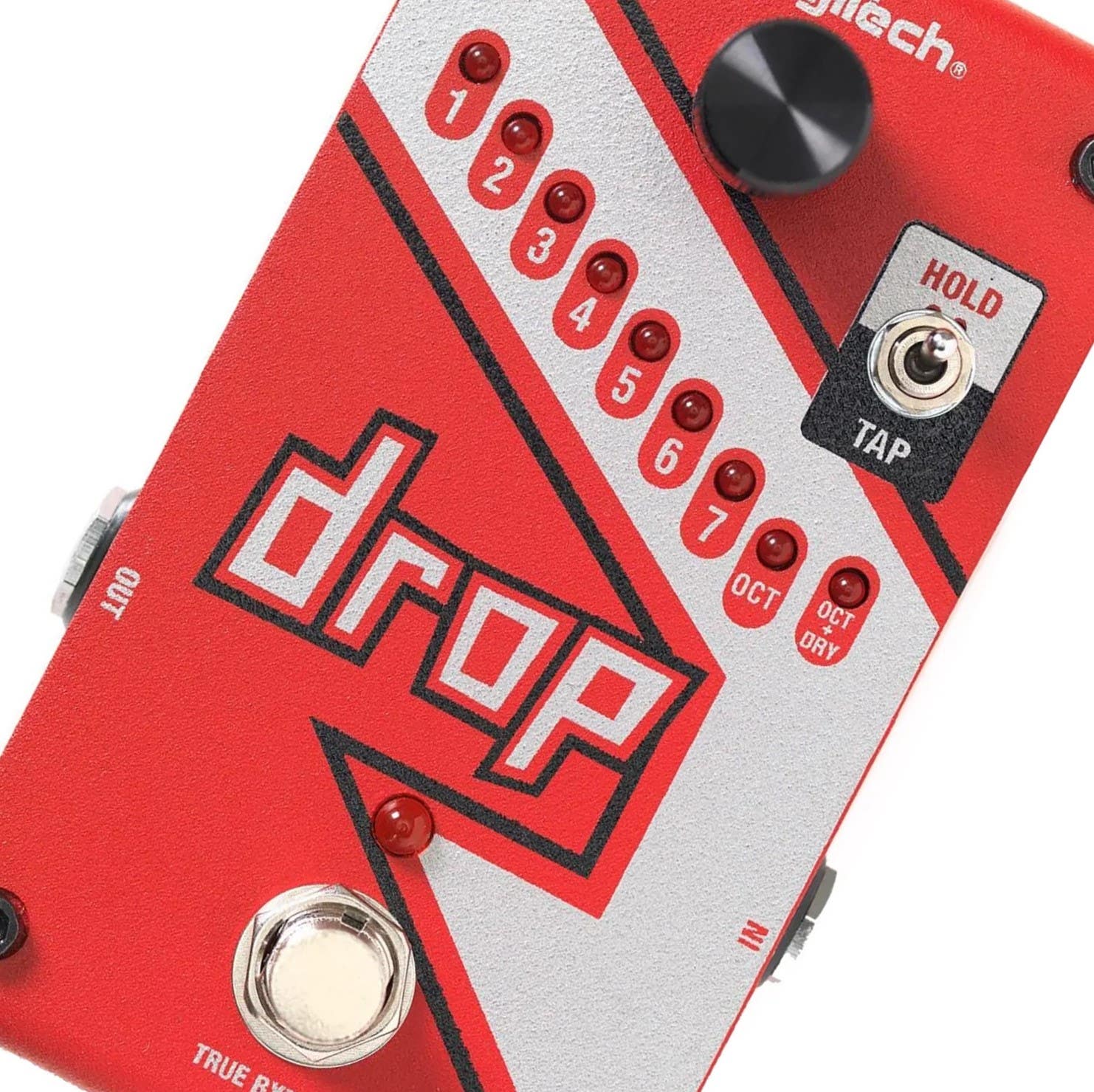
Westbrook admitted his board is packed with Walrus pedals, especially since the company started releasing blacked-out versions to keep the stage aesthetic clean. Chorus and tremolo are staples for him, tools that push him to create fresh guitar parts instead of falling back on delay and reverb. His secret weapon, though, is the DigiTech Drop, which he uses to change keys on the fly. “It gives the song more depth, more excitement,” he said, joking that he calls it “girth,” even if that word is hard to say on camera.
Keeley’s setup is more fluid. With engineers constantly dropping prototypes on his desk, his pedalboard rarely stays the same for long. One thing he insists on, however, is keeping a compressor around. “Gotta have a compressor to show it’s still valid,” he joked. For him, it’s as much about proving the tool’s versatility as it is about tone.
Stillman, meanwhile, admitted his “board” is often just a pile of loose enclosures on the floor. The life of a prototyper doesn’t leave much room for a permanent rig. The one pedal he stockpiles, though, is the same one Westbrook praised: the DigiTech Drop. “It’s the only modern pedal I own multiples of,” he confessed. “I buy backups in case they stop making it.”
As for signal chain preferences, the group had strong opinions. Stillman was adamant that delay before distortion sounds “scratchy and weird,” while Westbrook and Keeley pointed out that switching the order of effects like tremolo and reverb or fuzz and octave can completely change a pedal’s personality.
It was clear that for all their different approaches, each builder treats the board not as a fixed setup, but as an instrument in its own right.
The Realities of Building Pedals in 2025
The mood shifted when the discussion turned to business. Inflation, rising component costs, and tariffs have all put pressure on U.S. pedal makers. Westbrook explained that once prices go up, it’s nearly impossible to bring them back down without disrupting the entire dealer network. “The ripple effects are huge,” he said. “So you want to be fair, and you want to be right.”
Stillman added that customers sometimes assume pedal makers are price-gouging, when in reality margins are slim. “These are luxury items,” he pointed out. “Even a small price bump can mean the death of a business.”
Keeley echoed the sentiment, noting that overseas companies can access the same supply chains without the burden of U.S. tariffs, leaving domestic builders at a disadvantage.
Despite the challenges, all three agreed that loyal players keep them going. Best-sellers create the financial stability that allows “lab pedals,” those weird, risky experiments, to exist. And as long as the community supports them, they’ll keep pushing out the ideas that make guitar culture exciting.
What’s Next?
To wrap things up, the group reflected on the future of pedal design. Stillman was quick to shoot down the myth that totally new ideas always sell. “Players usually want familiar, just different enough,” he said. Completely original concepts get attention, but rarely long-term traction.
Westbrook believes the real innovation lies in usability. “The faster someone can find a great sound, the better,” he explained. Walrus has even started using rotary selectors on certain designs, allowing players to land on record-ready tones without sifting through endless options. Keeley emphasized value and fairness in pricing, while Stillman reminded everyone that new sounds often arrive by accident, not deliberate planning.
Taken together, their answers paint a picture of an industry that thrives on tension: between familiar and new, between chaos and control, between accidents and intention. The stompbox world may not have infinite undiscovered sounds, but as these builders prove, there’s still infinite room to reinterpret and inspire.

Closing Thoughts
From a misaddressed memory chip that birthed the Halo to the endless variations of a Tube Screamer, this roundtable showed that pedal design is as unpredictable as ever.
Walrus Audio, EarthQuaker Devices, and Keeley Electronics might take different paths, but they share the same driver: to create tools that inspire players. Mistakes, classics, experiments — they all have a place on a guitarist’s board.
AMS is proud to carry these builders, whose passion keeps pushing music forward. Explore the latest from Walrus, EarthQuaker, and Keeley today, and maybe stumble into your own happy accidents. And don’t forget to subscribe to the AMS YouTube Channel for more musical content just like this.