Mic check, mic check, can I get a mic check!?
You need a microphone to help your voice be heard. And when you start your search, it’s easy to assume that all mics operate the same. But with the development and evolution of digital technology, there are now options available that have changed how we can approach capturing and broadcasting sound. I’m talking about USB microphones! After all, music instruments, audio production hardware, controllers, lighting, and even certain household appliances and everyday items run now can run with a USB connection. It’s no surprise that microphones have joined the club.
So, what are the differences between a USB vs. XLR mic, and which would work best for your specific needs? We’re here to point you in the right direction!
What Are XLR Microphones?

Whenever anyone talks about a microphone, they’re most likely referring to an XLR mic: the tried-and-true design that has been around for nearly a century. And while improvements have been made steadily throughout the decades, the science behind them has remained remarkably consistent.
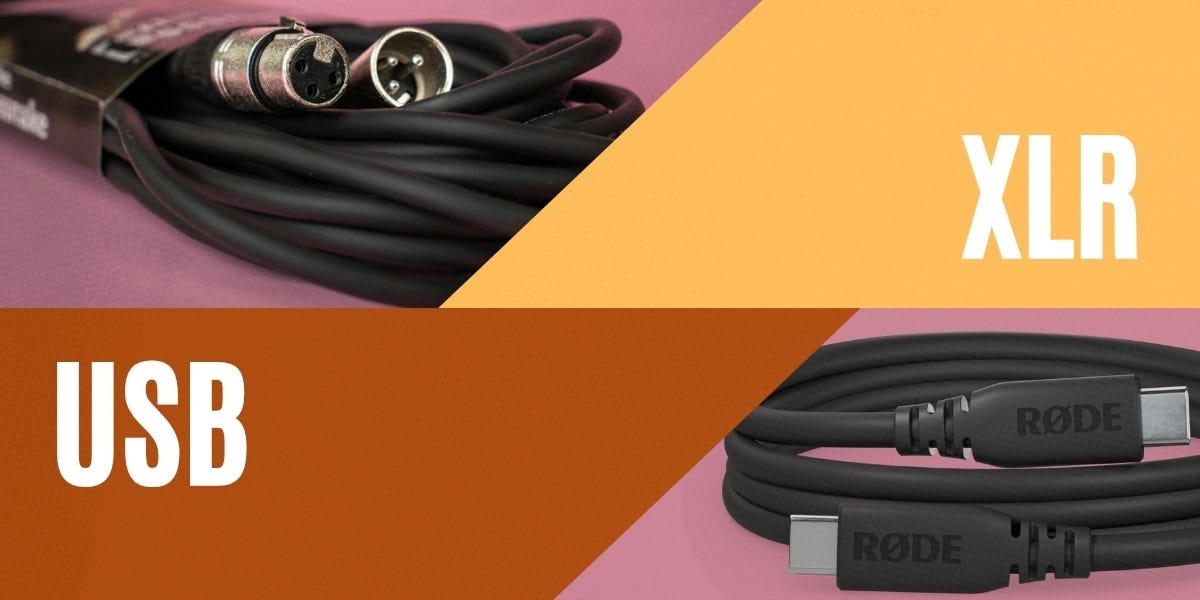
XLR microphones are devices that take sound waves and convert them into electrical signal. They transmit that signal through a three-pin XLR cable (“balanced”) to its destination, which could be a mixing console, audio interface, or direct speaker input.
When to Use an XLR Microphone
There are so many applications! Where do we even begin…
For starters, XLR microphones are used as the foundation for live applications as part of a performance PA speaker system. Basically if it captures sound for a live performance, it’s probably going to use an XLR connection.
Dynamic microphones are versatile, consistent, can handle louder sound sources and more decibel-intensive audio signal, and most notably don’t require any power.
Condenser microphones capture specific details with additional nuance and character based on their design configurations and will require phantom power to operate – either directly from a mixer or interface through the attached XLR cable *or* with an external power supply in more rare cases.
Because they have electrical components and circuitry, there are considered “analog” devices. And for the longest time, they worked in conjunction with analog mixing consoles and speakers.
But innovation marches forward. These mics can also be used with digital devices that contain built-in analog-to-digital converters (A/D) in both live and studio recording settings. This is why you need a digital mixer or digital audio interface to use standard XLR microphones with your desktop computer, laptop, tablet, or smartphone.
If you’re planning on doing larger scale music production, recording, or live sound with multiple voices and instruments, using XLR microphones and steadily building a collection to cover your needs is the way to go.
What Are USB Microphones?

A USB microphone is a standalone device that connects directly to a desktop computer, laptop, or device like a tablet or smartphone though – you guessed it – a USB cable!
The concept is the same as an XLR mic: transmitting sound waves as signal. But with a USB mic, everything is completely digital with its own internal A/D convertors. Simply plug it in, go your device settings, enable the USB microphone as your primary input source, and you’re ready to go.
Sometimes some extra software is required. And if you plan on using a tablet or phone, you may need to check the specs for compatibility. These microphones are bus-powered, which means that they run off the power from your computer through the USB cable.
When to Use a USB Mic
Sure, when you need to broadcast or record something quickly, the built-in microphones in our devices can get the job done in a pinch. However, when you upgrade to a USB Microphone, you’ll immediately notice a huge difference in quality. Your voice will come through loud, clear, and with plenty of confidence during corporate web conferencing, online meetings, and collaborative work over distance.
The main benefit of USB mics is that they’re incredibly straightforward to use and can easily fit in a backpack or briefcase when you travel. They’re a wonderful investment for personal and professional development.
But what about larger creative projects of greater scope? Well, in the world of audio production, it’s also important to remember that less can be more. Don’t get me wrong, having plenty of gear to choose from when shaping the sonic character of your recording is a huge plus. But deploying a simple, more straightforward setup can be a huge catalyst for getting the ideas flowing and audio captured more quickly.
This is where a great USB microphone will show its value! “Paralysis by analysis” is real, and there are times when too many choices will stop a project in its tracks completely. If inspiration strikes when you’re travelling, if you work in a location that is short on space, or if you want a solo audio production project such as podcast, livestream, YouTube content creation, or voiceover work, a USB microphone is the just the thing to simplify a recording and production process and get things moving.
USB vs. XLR Mic: Which One Is Best?
Just like everything in the music world, the “best” option is the one that fits your needs. But when it comes to the USB vs. XLR mic debate, it basically goes like this:
- For professional audio recording or long cable runs in a live sound environment – go with an XLR mic.
- For simplicity and direct-to-device recording, like when podcasting or streaming – go with a USB mic.
XLR microphones typically offer greater foundation in both frequency range and dynamics. However, you’re going to need a mixer to get the lovely high-fidelity sound to your DAW or front of house speakers — which means more gear and more know-how. Plus, how long is your longest USB cable…? Probably not that long. If you need to do long cable runs for a live show, XLR is definitely the way to go.
The biggest downside to USB microphones is that they don’t typically offer the same depth of sound compared to XLR mics. Since they’re designed to be multi-purpose devices with convenience in mind, they’re less likely to have those certain tonal characteristics that define the different XLR mics. But that absolutely doesn’t mean they’re bad! There are plenty of musicians out there recording vocals with a USB mic. Why? Because they’re straightforward and easy to use. Just plug them into your laptop or mobile device, and you’re ready to record, no mixer required.
Top USB and XLR Microphone Brands
There are tons of USB and XLR microphones out there, and the hunt for the perfect one can feel daunting. Here are a few of the best microphone brands on the market today, just to give you an idea of where to start:
- Shure – high-quality, durable, and reliable XLR and USB microphones for all situations. There’s a reason that every single recording studio and live band touring rig has plenty of Shure microphones in their collection. They consistently get the job done!
- RODE – XLR and USB mics used by podcasters and recording experts all over the world. Some of their mics are hybrid, meaning they’re USB AND XLR!
- Sennheiser – when you absolutely, positively need top-level sound quality over an XLR connection.
- Zoom – USB and XLR mics that address your creative needs without breaking the bank.
Find the Perfect XLR or USB Mic for Your Setup
Now that you know which type of microphone is best suited for your situation, American Musical Supply is here to help you find the perfect mic to complete your projects quickly and at the lowest price!
At AMS, you’ll find a wide variety of XLR and USB microphones from the brands that do it best. And with our 0% interest payment plans, you can spread out the payments on specific models, bundle a group of them together, and steadily build a mic collection that would make even recording pros jealous.