
Amongst the many studio monitors that are available these days, it might be difficult to understand if choosing one set over another really makes a difference. In this article, we’re going to get into what type of monitors serves each purpose and why that is so. Specifically, we’re going to highlight the key differences between active and passive studio monitors, why that matters, and what you should consider when choosing which monitors to get.
What Are Studio Monitors?
Studio monitors are specialized speakers designed for dynamic listening where the demand for sound quality as at its highest, particularly during recording, mixing, and mastering.
Unlike typical consumer-based speakers, which often enhance certain frequencies to make the music sound more appealing, studio monitors are built to deliver a flat, uncolored frequency response. This means they aim to reproduce sound as accurately and transparently as possible, without boosting the bass or treble. You might wonder, “Does this really matter in the end, especially when the general public won’t be using the same studio monitors to listen to music?” The answer is YES!
The primary purpose of studio monitors in a production environment is to give audio engineers and producers a clear and honest representation of their work. This accuracy allows them to make informed decisions about balance, EQ, panning, effects, and other factors ensuring the final audio mix translates well across all playback systems, from car stereos all the way to smartphone speakers.
For audio engineers and producers, it’s critical to record and mix without any biases or filters that affect the mix. Otherwise, you’re just setting yourself up for an unbalanced mix and lots of revisions.
In essence, studio monitors are an important tool for anyone working with audio professionally. They help eliminate guesswork and provide a reliable reference point for achieving mixes that sound great everywhere, not just in the studio.
Now that you know you need studio monitors for an accurate mix, which type should you get? Studio monitors fall into two main categories: Active vs. Passive Studio Monitors. And there are pros and cons to each.
What Are Active Studio Monitors?
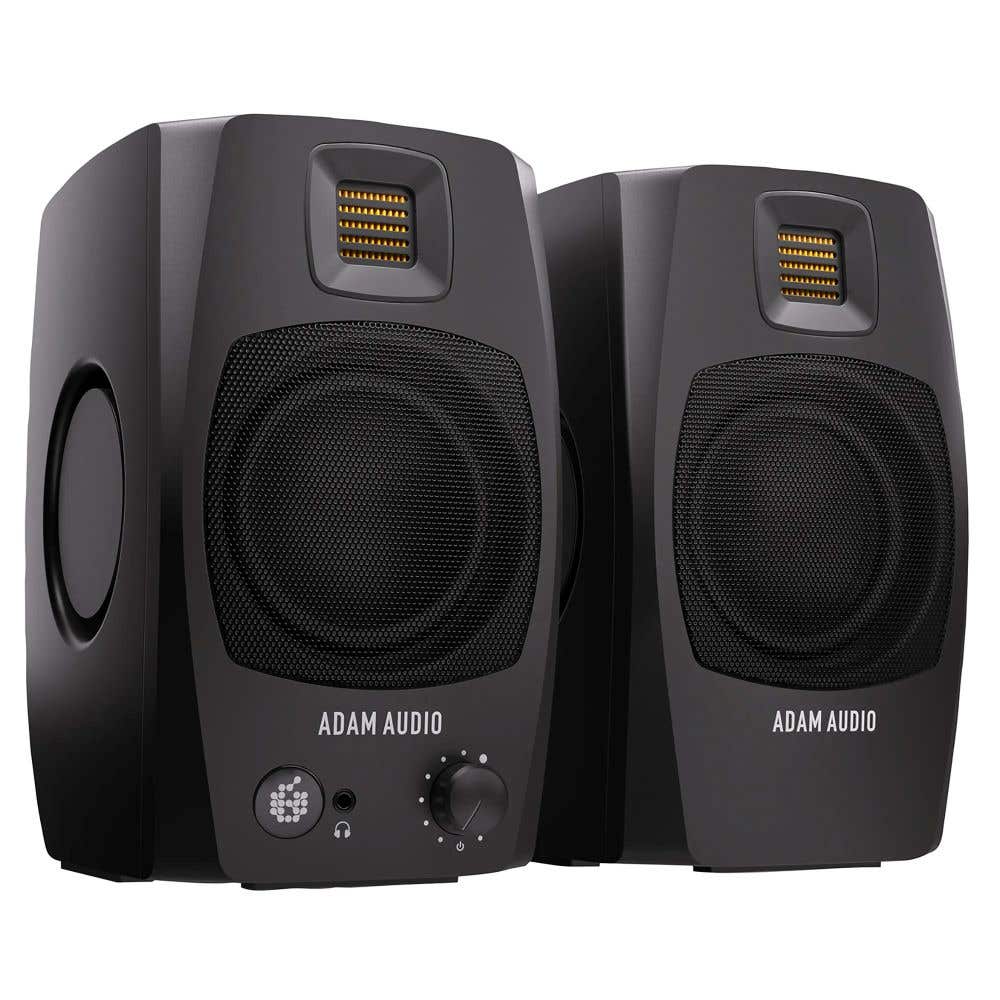
Active studio monitors (also called powered studio monitors) have become the industry standard for professional and home studios alike, and there’s a good reason for that. Their self-contained design, sound accuracy, and user-friendly nature make them an ideal choice for music production, mixing, and highly critical listening environments.
Active monitors feature built-in power amplifiers. Each driver (woofer, tweeter, and in some models, a midrange driver) typically has its own dedicated amplifier channel, a design known as bi-amping or tri-amping. This configuration ensures that each driver gets the exact amount of power it needs and that the crossover (the circuit that splits the audio signal into different frequency ranges) operates before amplification. This is called an active crossover, and it allows for much more precise tuning of the speaker system than in passive monitors.
Advantages and Disadvantages of Active Studio Monitors
Active studio monitors have a lot of benefits that set them apart from their counterpart – passive monitors.
Pros:
- Simplified setup with fewer components and cables.
- Reliable sound accuracy due to integrated amplifier/speaker pairing.
- Compact and efficient, ideal for home and professional studios — not to mention the ease it provides to those who have mobile touring rigs as well.
- Of course, everything has its pair of opposites.
Cons:
- Usually more expensive than comparable passive models.
- Heavier, since the amp is built in.
- Integrated design means repairs can be more complex if a component fails. You might have to replace the whole speaker as opposed to individual parts.
- Needs a power source
Active studio monitors are widely favored in modern music production due to their convenience and all-in-one design. Since they have built-in amplifiers that are perfectly matched to their speakers, they simplify setup and reduce the need for additional equipment like external amps or complex wiring. Let’s take a look at when you might want to use active monitors and why they might be the right set of speakers for you.
When to Use Active Studio Monitors
Active studio monitors serve a great purpose for individuals in settings like:
- Home / project studios
- Professional studios
- Mobile setups
- Multimedia and post-production environments
In today’s landscape of music production, active studio monitors are the go-to solution for their plug-and-play design, accurate sound reproduction, and setup simplicity which makes them a clear choice for anyone who wants great sound without the complexity of external amplification. No matter what, if you’re thinking about choosing a set of speakers for yourself, you won’t be disappointed by going active. But let’s not stop here. What about the other option: passive studio monitors?
What Are Passive Studio Monitors?

While active studio monitors dominate today’s music production scene, passive studio monitors (also called unpowered studio monitors) still have their rightful place, especially among seasoned engineers and those who enjoy customizing their audio setup.
Unlike active monitors, passive monitors do not have built-in amplifiers. Instead, they rely on an external amplifier to provide power to the speakers. Inside each passive monitor is a passive crossover, which splits the amplified signal into different frequency bands (bass, midrange, treble) and routes them to the appropriate drivers.
This means that you have to carefully match your amplifier’s power and impedance to the monitors to avoid poor sound quality or damage. However, with a perfectly matched quality amp, passive monitors can deliver a rich and natural sound that some describe as more "organic" and “natural” than active monitors. Of course, poorly matched components can result in less accurate frequency response and weaker driver control, so be aware when choosing and connecting them.
Advantages and Disadvantages of Passive Studio Monitors
Passive studio monitors bring their own unique advantages and disadvantages, which are basically the flipside of the active world.
Pros:
- Customizable sound system, ideal for users who want precise control.
- Generally lighter without built-in electronics.
- Independent upgrades possible between amp and speakers.
- No additional power requirements.
While these advantages really depend on your needs, preferences, and the type of work you’ll be involved in, so do the disadvantages.
Cons:
- More complex setup, requiring knowledge of impedance matching, power ratings, and wiring.
- More components and cables to manage.
- Easier to misconfigure, which can impact audio quality.
Passive monitors are great for audio nerds, and are more common in legacy setups or high-end, tailored audio environments where control over each part of the signal chain is a priority. So, if you’re feeling particular about your audio, then passive studio montiors will be the ones to bring you to your promise land.
Typical Uses of Passive Studio Monitors
Passive studio monitors have their place for individuals who are looking for a specific sound, especially in settings like:
- Professional recording studios
- Large or complex audio systems
- Hi-Fi listening rooms
- Live sound and PA systems
At the end of the day, passive monitors are best suited for users comfortable with more hands-on setup and who desire maximum control of their sonic environment.
Popular Studio Monitor Brands and Models
To get started as you go on your search for the right pair of active or passive studio monitors, you’ll want to familiarize yourself with some of the trustworthy brands and their models. Here’s a few top studio monitor models to check out:
- Yamaha HS8 8 Inch Powered Studio Monitor
- KRK RP103 ROKIT 103 G4 Tri-Amp 10" Three Way Powered Studio Monitor
- Adam Audio A7V 7" Active 2 Way Studio Monitor
- JBL 308P MKII 3 Series 8" 2-Way Powered Studio Monitor
- Avantone CLA10 Passive Black Studio Monitors Pair
These are just a few of our favorites of ours, but don’t limit yourself to just these. There are so many out there to discover, it’s actually scary!

Yamaha HS8 Powered Studio Monitor in Slate Grey
Special Price $398.99


Considerations When Choosing Between Active vs. Passive Studio Monitors
For most musicians and producers, especially those setting up a home or project studio, active studio monitors are the most practical and reliable choice. They offer ease of use, accurate and clear sound, and way less gear clutter. Just plug them in and go! We all could use less chaos in the world of wires and cables...
If you’re an experienced engineer or audiophile who values maximum control and already owns quality amplification equipment, passive monitors can be a great option to fit your hi-fi needs.
Ultimately, the right choice comes down to your workflow, experience level, studio goals, and listening tastes.
Ready to Find Your Perfect Studio Monitor Match?
Whether you decide to choose active or passive studio monitors, there’s definitely a set out there that will work for your unique needs. And if you have any questions, reach out to the gear experts on our AMS Customer Service team at 800-458-4076. They’re all experienced musicians who can help point you in the right direction.
In the meantime, feel free to browse our website for more details, models, ideas and exclusive offers! There’s lots of goodies to uncover.