If you’ve ever stood on stage fighting with a floor wedge, trying to hear your own voice over cymbal wash and guitar bleed, you already understand why in-ear monitors exist. Wedges are chaos. They get loud, they get muddy, and everyone keeps asking the sound tech for “just a little more me,” which eventually becomes “a lot more everybody” until the mix turns into soup. IEMs are the antidote to that.
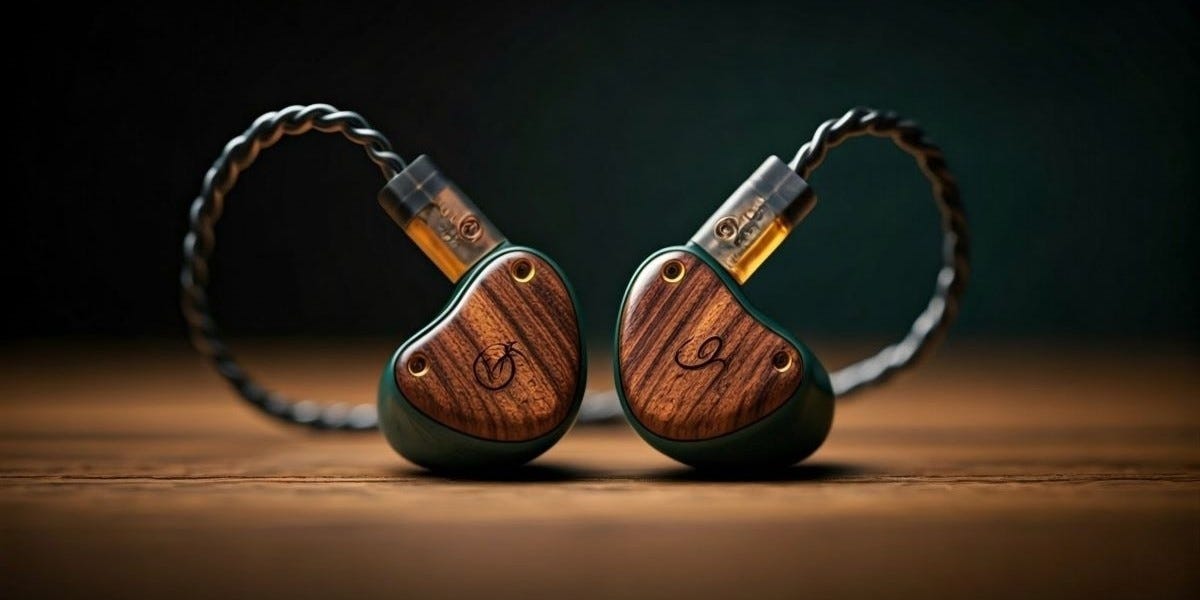
In-ear monitors (IEMs) are compact earbuds that seal in your ears and give you a direct, isolated feed of your mix. Unlike regular earbuds, which are tuned for casual listening, IEMs are designed for accuracy, consistency, and feedback-free monitoring. They’re used not only by performing musicians, but also by content creators, livestreamers, and studio players who want to hear themselves clearly without blasting sound into the room. They protect your hearing, tighten your timing, and make you feel more confident on stage — provided you pick the right pair and get a proper seal. That’s where we come in...
How IEMs Actually Work
Most IEMs use one of three driver types: single dynamic drivers (similar to a mini speaker cone), balanced armature drivers (originally developed for hearing aids), or a hybrid combination of the two.
Dynamic drivers tend to deliver fuller, more natural low end, while balanced armatures excel in clarity and detail. Multi-driver earphones — such as dual, triple, or quad-driver designs — split the frequency workload between multiple components, similar to a PA with separate tweeters and woofers. That’s why something like a Shure SE425 or SE535 sounds more separated and “hi-fi” than the entry-level SE215.
But the driver isn’t the whole story. Fit is everything. If you don’t have a proper seal in your ear canal, the entire low end disappears and you’ll crank the volume to compensate. That’s how people damage their hearing even when using IEMs.
Foam tips generally give the tightest seal and the most isolation, often reducing stage volume by 25–35 decibels, while silicone tips feel a little more breathable and are easier to insert quickly. I’ve played entire shows when switching from silicone to foam tips made a bigger difference in clarity than changing the earphones themselves.
And how do they get the sound? Through an IEM System, which is basically a dedicated signal to your IEM straight from the mixer.
Real-World Uses for IEMs
On stage, IEMs immediately clean up communication between bandmates. The bass player locks tighter to the kick. Background vocalists stop chasing pitch. Drummers stop overplaying.
In my band, Good for Gary, I’ve used several universal-fit in-ear models over the years, including the Shure SE215 (solid starter), the Shure SE425 (nice clarity upgrade), and even the Xvive T9 dual balanced-armature set, which is a nice surprise in the affordable lane.
These days, I rely on a custom-molded Alclair set because the fit is perfect every time. The same mix sounds the same from night to night. But I still keep a set of Shures in my gig bag as a backup, because nothing kills a show faster than losing your ears mid-set.
What Makes a Good IEM
A good IEM comes down to a few key factors:
- Fit and isolation: Without a solid seal, everything else is irrelevant.
- Driver configuration: Do you want warmth and punch or surgical detail?
- Cable and reliability: detachable, over-ear cables are a lifesaver when something fails mid-gig.
- Tuning and frequency balance: Some IEMs are flatter and more honest; others emphasize bass or presence to make live singing easier.
How to Set the Perfect IEM Mix
Once you’ve got the perfect IEM fit, your mix is half the battle.
The best way to build an IEM mix is from the ground up: start with kick and snare, add bass, then your own vocal and instrument. After that, only add the essentials.
The more elements you cram into your ears, the less impact each one has. Think like a record, not like a PA system.
The Best IEMs


If you’re just getting into IEMs, or you need a reliable backup set, the Shure SE215 (or the Special Edition SE215SPE) is the workhorse entry point. Single dynamic driver, rugged detachable cable, and strong isolation. It’s warm, forgiving, and does the job night after night.
Want a step up in clarity and instrument separation? The Shure SE425 delivers that with dual balanced-armature drivers — one for lows and mids, one for highs. Vocals sit cleaner, cymbals don’t smear together, and you hear pitch issues before the audience does.

Prefer something with more punch in the low end but still affordable? The Mackie MP-220 uses dual dynamic drivers that hit harder without muddying up the mids. They’re popular with drummers and bassists who want more thump without losing articulation.
If you want to ditch the cable and go wireless, the Xvive U45T9 wireless system is a great value. It comes with everything you need to start using your IEMs right away. It also sends your mix over 5.8GHz for better interference rejection than older 2.4GHz packs and comes bundled with the Xvive T9 earphones.
If you already have a wired setup and just want better earbuds, the T9s are also sold separately.


Now, for those who want to jump to the pro tier:

The Shure SE535 is a triple balanced-armature design — and one of the most commonly seen high-end sets in touring rigs. What makes it special is the midrange detail. It’s very easy to hear your own voice, even in dense arrangements. They’re not hyped; they’re accurate, which makes them great for disciplined monitoring.
Audio-Technica’s ATH-CK2000Ti brings a different flavor to the high-end IEM game. Built with lightweight precision-cut, full-titanium housings and a dual-phase push-pull driver system, they deliver a fast, ultra-detailed sound with impressive width and depth. The tuning leans toward a refined, open presentation — crystal-clear highs, tight bass extension, and a smooth overall response that feels more like listening to a high-end set of reference monitors than a typical stage-focused IEM. If you’re chasing an immersive, studio-grade listening experience inside your ear canal, these will get you there.
The Shure SE846 takes things even further with four balanced-armature drivers and customizable tuning filters. You can swap between warm, balanced, or bright sonic signatures depending on your preference. I don’t own a pair, but half my band does — and a couple of those guys skipped customs entirely and went straight to the SE846. If seasoned musicians are choosing them over custom fits, you know Shure is doing something right. They reveal everything. If you hit a wrong note, they’ll make you face it. Some people don’t want that level of truth. Others crave it.
Ready to Ditch the Wedge for IEMs?
In-ear monitors aren’t just about hearing yourself better — they’re about performing with more confidence and protecting your ears long-term. They make you tighter, cleaner, and more intentional. Whether you’re upgrading from wedges, dialing in your livestream setup, or just tired of second-guessing your pitch, IEMs are one of the best investments you can make.
Start with a universal-fit model like the SE215 or Mackie MP-220 if you’re just testing the waters. Step up to something like the SE425 or SE535 when you’re ready for more clarity and separation. If you want to enter the true high-end arena without jumping straight to customs, Audio-Technica’s ATH-CK2000Ti offers a polished, audiophile-grade listening experience with premium build quality. And if you’re ready to lock in long-term, sets like the SE846 — or a custom-molded pair from a company like Alclair — will let you retire from wedge warfare permanently.
No matter what tier you land in, the key is fit: get a solid seal, build your mix with intention, and always keep a backup pair in your bag. Your future self will thank you.
Frequently Asked Questions About IEMs
I bought my IEMs and they’re great — but how do I actually get sound into them?
You’ll need a monitor feed from your mixer, and that can be delivered either through a wired belt pack or a wireless transmitter/receiver system. Most touring setups use wireless units like the Shure PSM series or the Sennheiser EW-D systems — your mixer sends your personal mix to the transmitter, and the receiver on your belt sends it straight to your IEMs. It’s simpler than it sounds, and we’ll be breaking the whole process down in an upcoming blog.
Are in-ear monitors better than stage wedges?
Almost always. They give you more control at lower volume, reduce feedback, and make your front-of-house engineer happier.
Can I use IEMs if I move around a lot?
Yes — over-ear cables stay secure, and wireless packs keep you untethered. Just route your cable behind your back or under your shirt.
Do I need custom-molded IEMs?
Not at first. Universal-fit IEMs with foam tips get you most of the way there. If you’re performing regularly, customs become worth it for consistency and comfort.
How loud should I run my IEMs?
Lower than you think. If you’re tempted to crank them, you’re probably missing low end. Check your seal or EQ the mix before raising volume.